

The complete guide
Choosing a Solar Trail Camera, A Practical Buyer's Guide
The problem with not knowing
Something is going on outside and you cannot see it. Maybe the vegetable patch keeps getting raided. Maybe there are prints along the dam every morning. Maybe the gate is open again and nobody will admit to it. You can sit up with a torch for a few nights, or you can put a camera there and let it do the sitting up for you.
That is the whole appeal of a motion activated trail camera. It watches a fixed spot, it does nothing until something moves, and then it records. No wiring, no monitor, no app notifications pinging all night. You walk out, check the footage, and you have your answer.
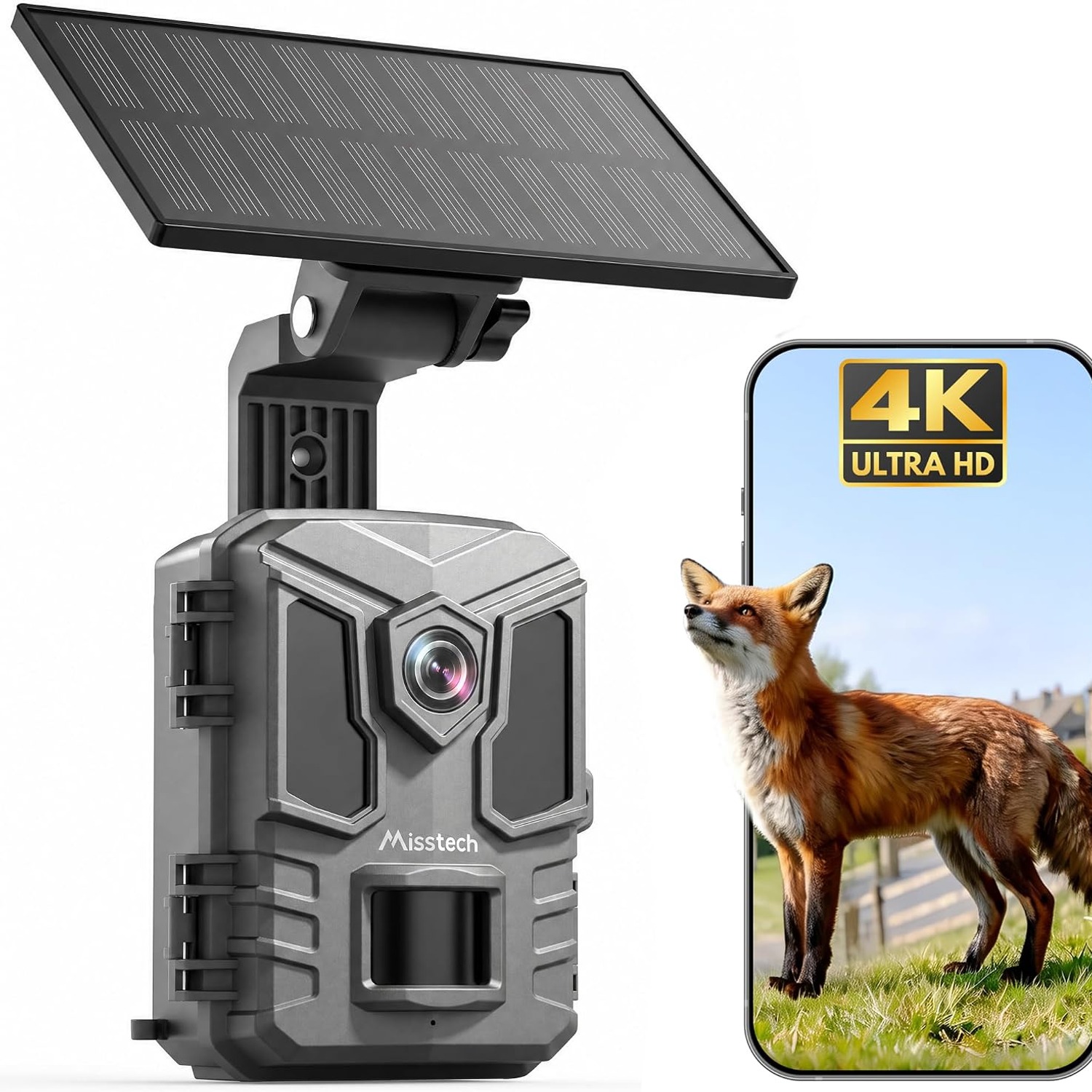
The thing that usually ruins the plan is power. Trail cameras eat batteries, especially in cold weather and especially when something keeps triggering them. People set a camera up full of enthusiasm, check it twice, and then forget. Six weeks later the interesting thing finally happens and the camera has been dead since the second week. A solar trail camera 4K setup is an attempt to fix exactly that problem.
How solar changes the routine
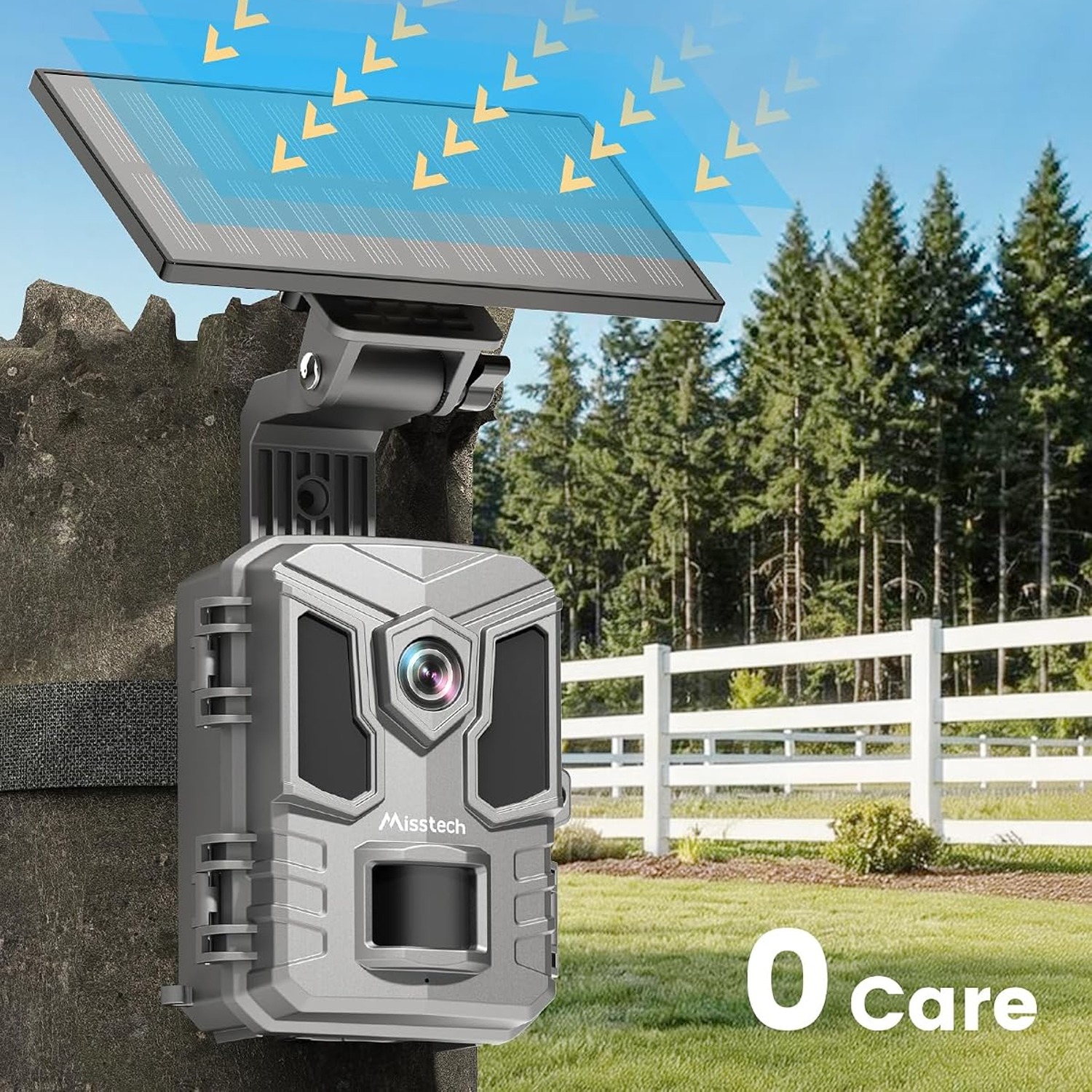
The panel on this camera feeds a built-in rechargeable battery. During daylight it tops itself up, and at night it runs off the stored charge. In practice this shifts the camera from something you maintain to something you install.
That matters for two reasons. The obvious one is convenience. The less obvious one is disturbance. Every time you walk up to a camera you leave scent, flatten grass and change the scene. Wild animals notice. A camera you visit once a month instead of once a week simply sees more natural behaviour.
Placement becomes more important when you are relying on sun, though. A north facing position in the southern hemisphere, or south facing in the north, tends to pick up the most light. Heavy canopy slows charging. It will not usually stop the camera working, but if you are mounting somewhere permanently dark, think about whether the spot gets any direct sun at all during the day.
What the image specs actually mean
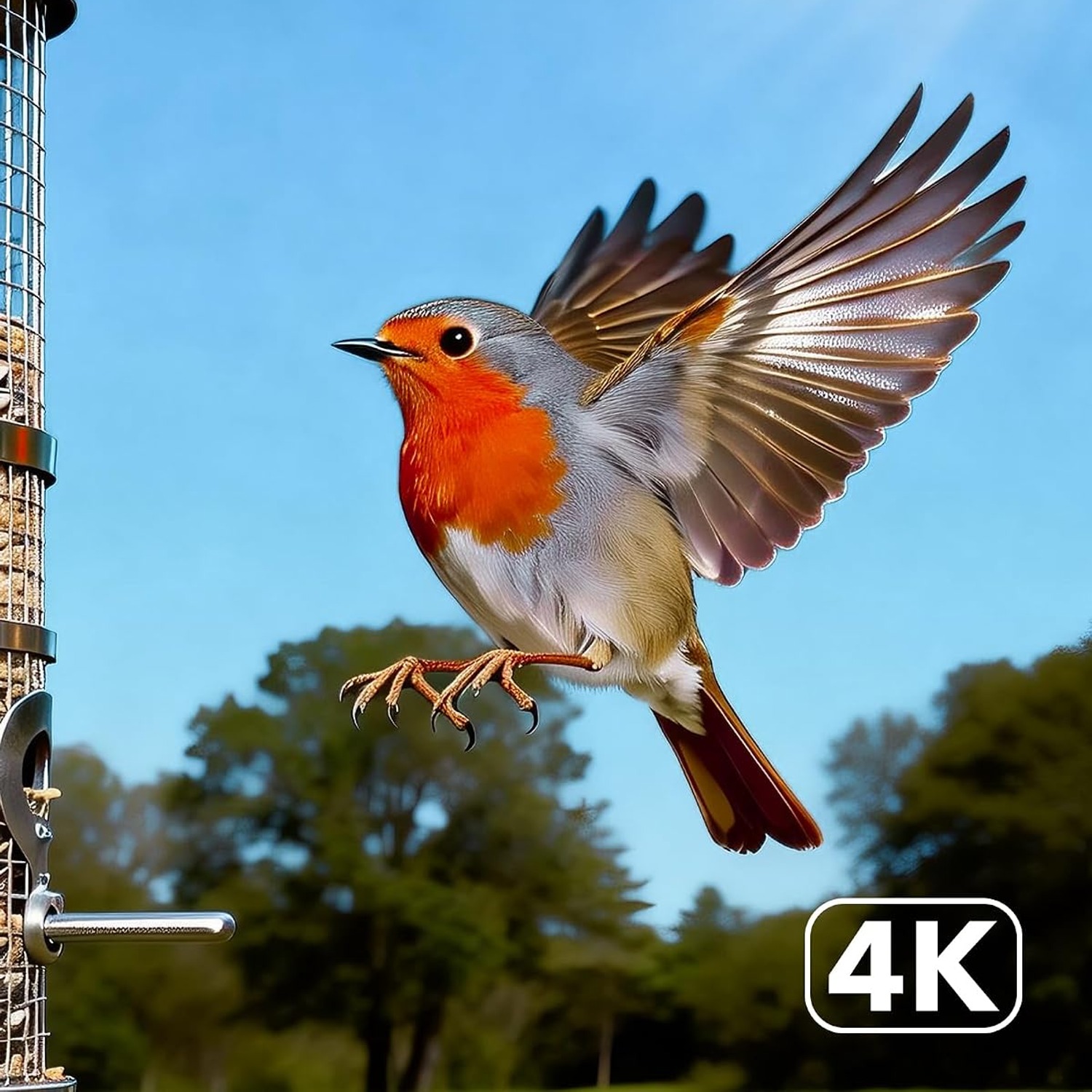
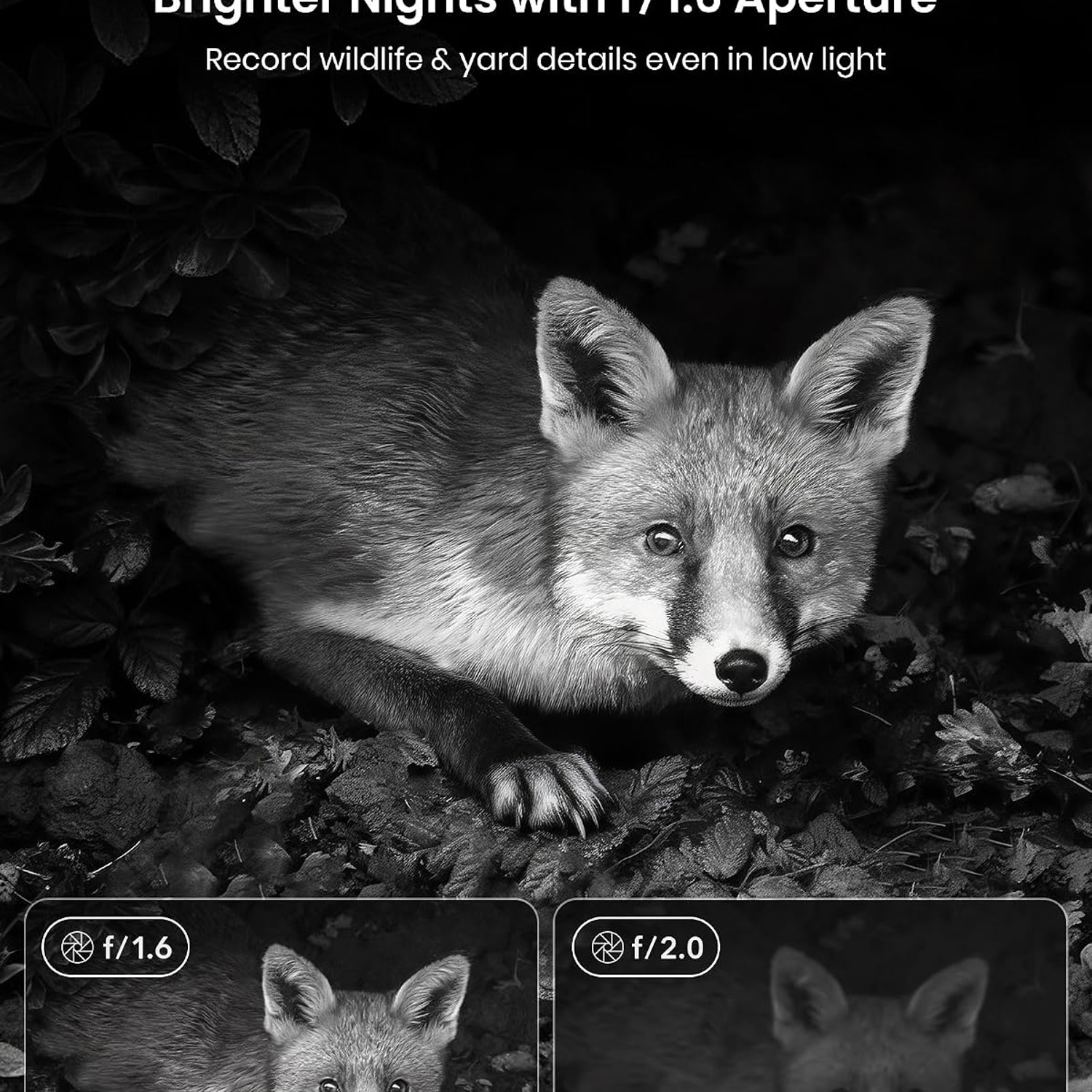
4K video and 64MP stills sound like marketing numbers, and to a point they are. Resolution alone does not make a good night shot. What matters more here is the f/1.6 lens aperture. A lower f-number means a wider opening and more light reaching the sensor, which is the difference between a usable frame at dusk and a grey smear.
Dawn and dusk are when most wildlife moves, so low light performance is the spec worth caring about. After full dark, night vision takes over using thermal sensing to pick up warm bodies.
The 0.1 second trigger speed is the other number that earns its place. Trail cameras famously photograph the empty space where an animal just was. Fast triggering plus the 5-frame sequence mode, which fires a short burst instead of a single shot, gives you a much better chance of a clean frame when something trots past rather than stopping to look around.
Resolution does pay off in one practical way. With 64MP you can crop hard into a photo and still identify what you are looking at. That is handy when the subject was further from the lens than you hoped.
Reviewing footage without the hassle
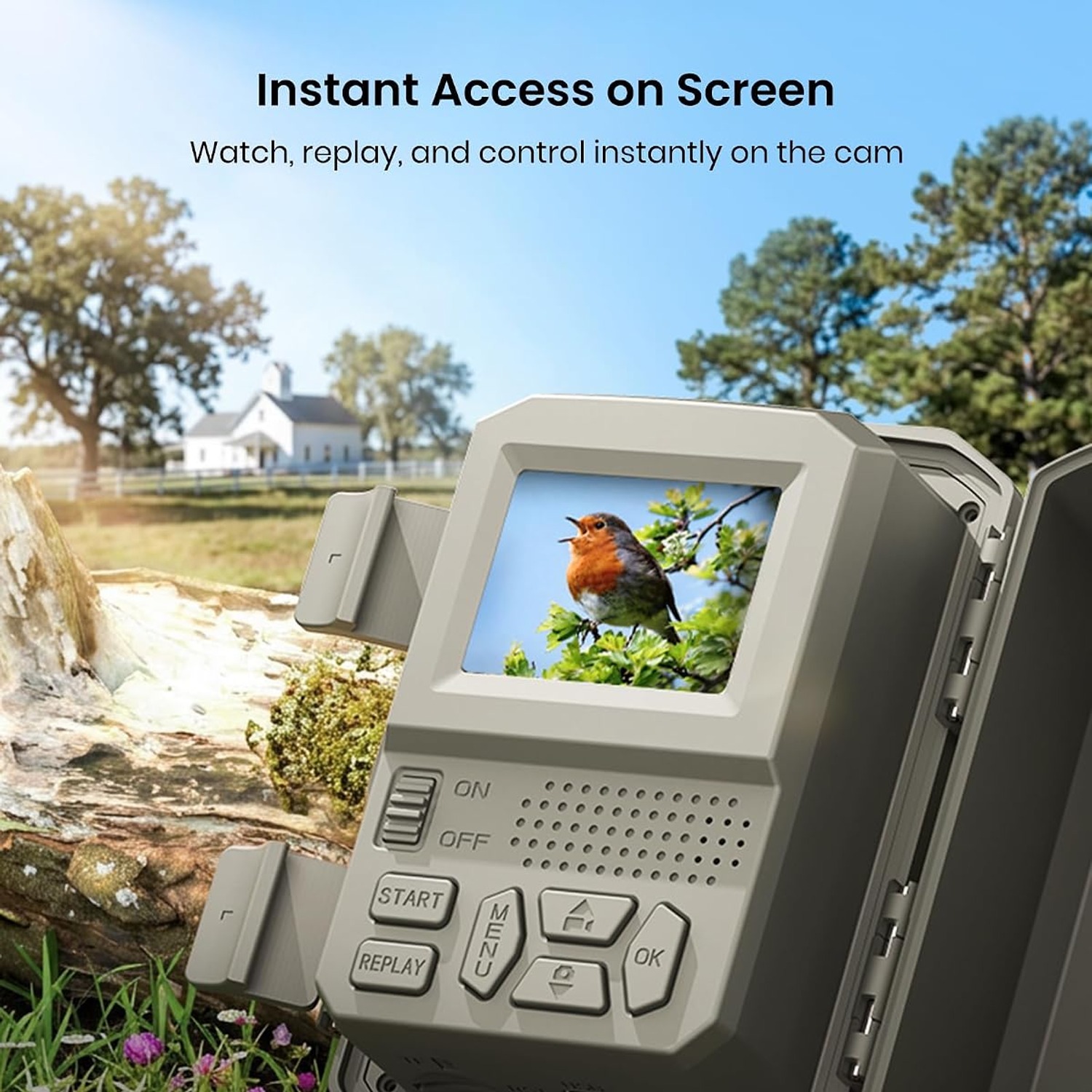
Older trail cameras meant a walk out, a card swap, a walk back and a laptop. This one has a 2.2 inch screen on the body, so you can press play at the tree and see what you caught in thirty seconds. If nothing good is on there, you leave it and walk away.
There is also the Trailcam Go app, connecting over Bluetooth, which lets you manage the gallery from up to 50m. Some people prefer it because the phone screen is bigger and easier to scroll. The app also stores the camera's saved location, which sounds trivial until you have four cameras on a property and only a vague memory of which fence line you used.
Storage is local, on a micro SD card. An 8GB card is included to get you started, and the slot takes up to 128GB. Loop recording keeps the camera going once the card is full by overwriting the oldest files. There is no cloud account and no monthly charge, so your footage stays on your card and your running cost stays at zero.
Who this suits
Hunters and wildlife watchers are the obvious group, and 4K with a fast trigger covers what they need. But a fair share of these cameras end up doing more domestic work.
Farmers and smallholders use them on water points, lambing fields, machinery sheds and gates that keep mysteriously opening. Suburban buyers put them on the back fence, over a chicken run or facing a driveway. Anyone trying to work out what is eating the garden at night will get an answer within a week.
A few people will be better off elsewhere. If you need alerts pushed to your phone the moment something walks past, you want a cellular camera instead, because this one stores locally rather than sending images over a network. If you need audio for your recordings, note that audio capture is not specified in this product's details.
Getting the setup right
Most disappointing trail camera footage comes from placement, not from the camera. A few things make an outsized difference.
Mount it at roughly the height of the animal's body, angled slightly down. Chest height suits medium sized wildlife, lower suits smaller creatures. Pointing straight out at head height tends to give you footage of backs and ears.
Avoid aiming directly east or west if you can. Low morning or evening sun straight into the lens will blow out the frame and can trigger the sensor as shadows shift.
Clear the foreground. Long grass, bracken and thin branches within a metre or two of the lens will wave in the wind and set the camera off repeatedly. Custom motion zones help here, letting you tell the camera to watch only the part of the scene you care about, but physically trimming the grass is still the simplest fix.
Pick a solid trunk or post. A camera strapped to a sapling will sway, and a swaying camera triggers on its own movement.
Finally, give it a few days before you judge it. Animals take time to settle after you have been tramping around their trail.
Looking after it
There is not much to it. The ABS housing is IP66 waterproof, so rain is not an issue, but the camera still needs the odd wipe. Keep the lens cover and the solar panel clean, because dust, pollen and bird mess on the panel will slow charging more than people expect.
Check the seal and the latch when you open it. Grit in the gasket is the usual cause of water getting in, and that is a user problem rather than a product one. Use a soft dry cloth and skip the solvents.
If you are putting it away for a season, pull the card, store it indoors somewhere dry, and leave the battery partly charged rather than completely flat.
The short version
This is a self-powering outdoor camera for people who want to know what is happening on their land without babysitting the gear. Solar charging and a built-in rechargeable battery remove the battery routine. 4K video, 64MP photos and an f/1.6 lens handle the low light conditions when wildlife is actually moving. A 0.1 second trigger and burst mode catch the fast ones.
You review footage on the built-in screen or in the phone app over Bluetooth, everything saves locally to the included 8GB card with up to 128GB supported, and there is no subscription attached to any of it. The IP66 ABS housing is made to stay strapped to a tree year round.
Put it in a spot with some daylight, clear the grass in front of it, and leave it alone. The camera will do the rest.