
The complete guide
How to Choose a Travel Tripod That You Will Actually Carry
The photo you nearly got
There is a particular kind of frustration that comes from a photo that was almost right. The scene was good, the light was good, and then you look at it later on a bigger screen and the whole thing is just slightly soft. Not blurred from motion in the frame, just soft, like someone breathed on the lens.
That is usually camera shake. In dim light your shutter stays open longer, and the small movements of your hands get recorded along with everything else. Hand-held you can get away with a lot, but not with everything. Sunsets, interiors, night scenes, long exposures of water, group shots where you want to be in them, any kind of serious video, those all want a tripod.
The problem is that the tripod most people buy first is too heavy. It sits in a cupboard. It comes out twice a year. The one you want is the one light enough that bringing it is not a decision you have to make.
What the numbers on this one mean
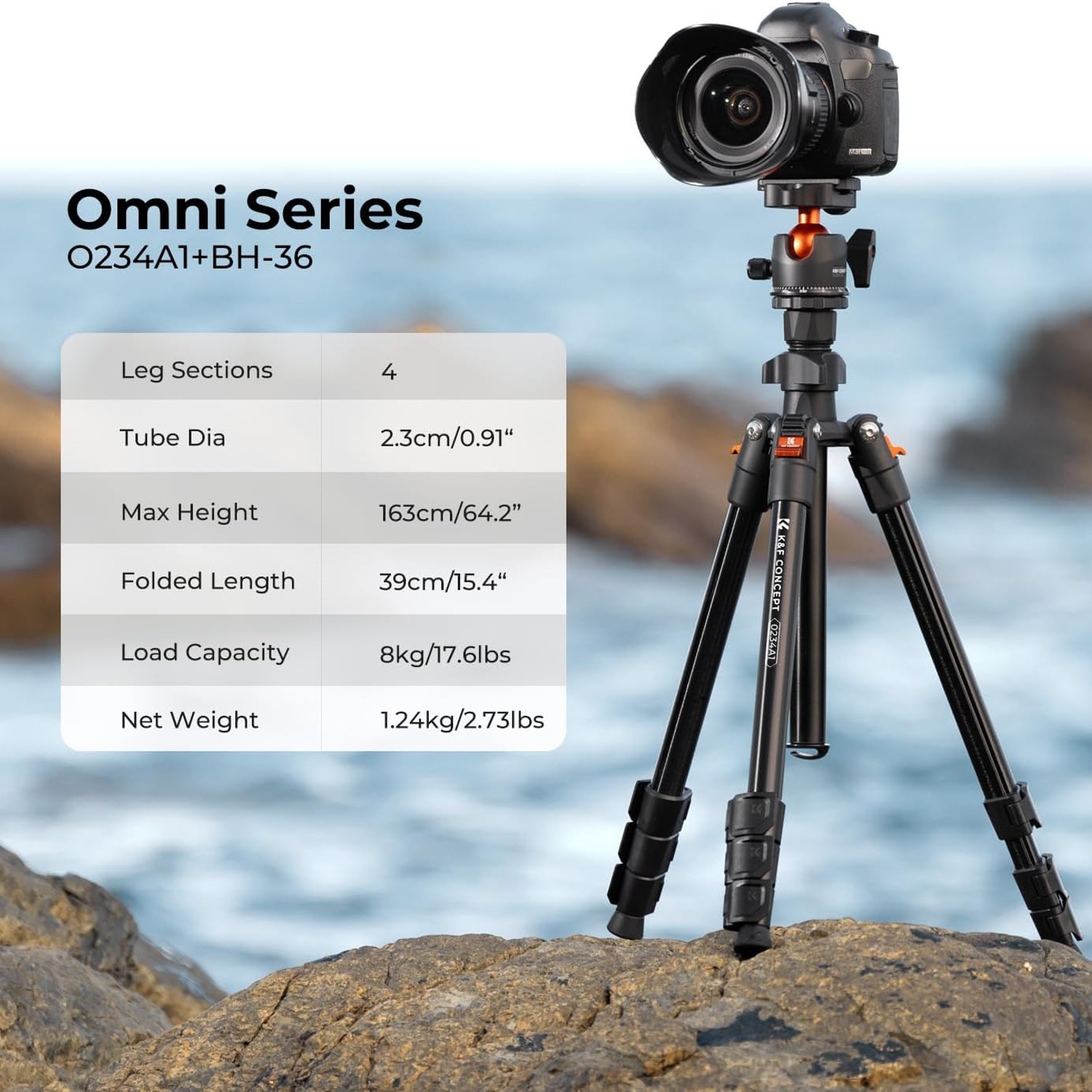
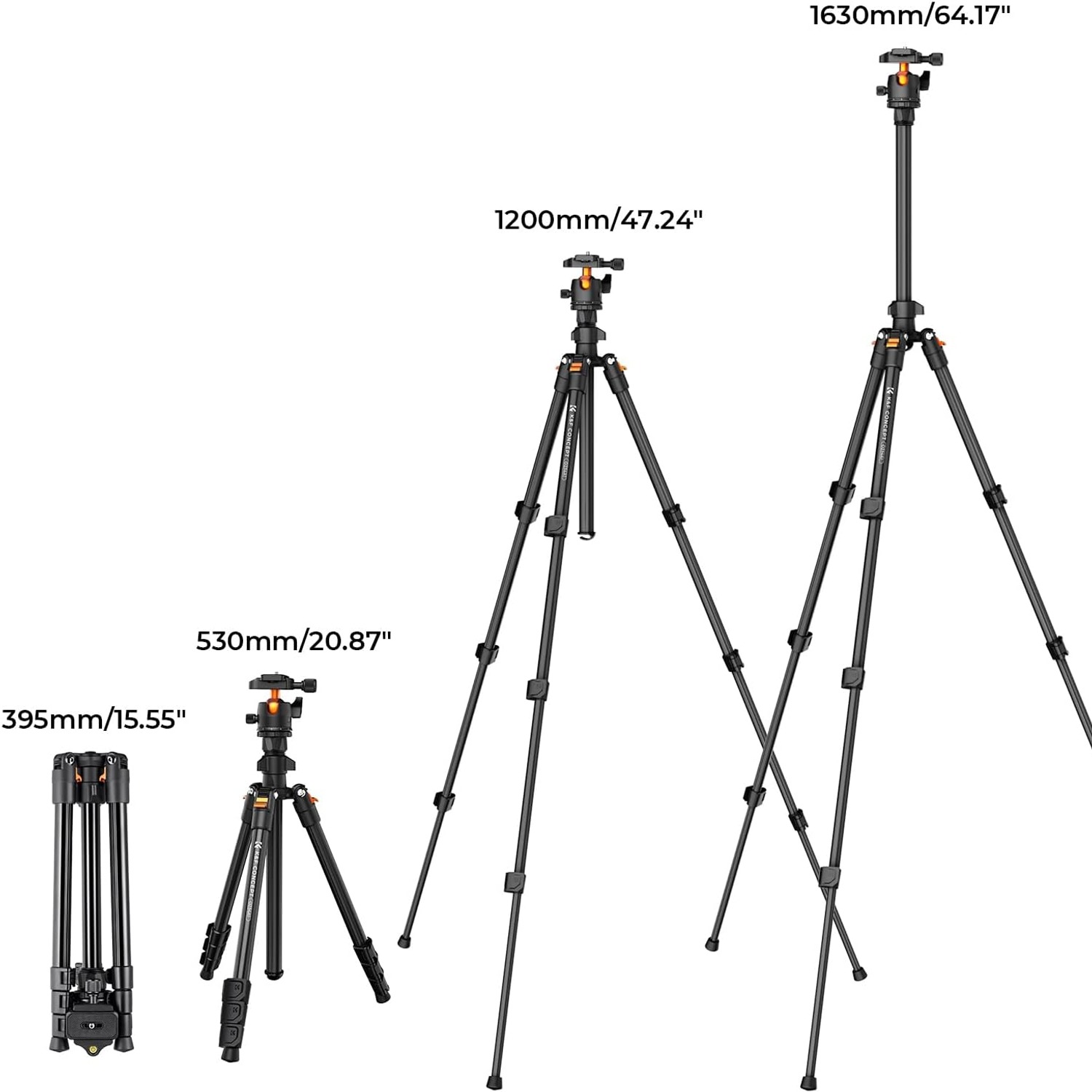
Four figures tell you most of what you need to know about any tripod: maximum height, folded length, weight and load rating. This one reads 163 cm, 39 cm, 1.15 kg and 8 kg.
Maximum height of 163 cm is the useful end. With the legs out and the centre column up, a camera on top sits near eye level for most adults. That matters because a tripod you have to stoop over all day is a tripod you resent. The rough rule photographers use is your own height, minus about 15 cm, minus the height of the camera body. Someone around 175 cm tall lands comfortably in range here.
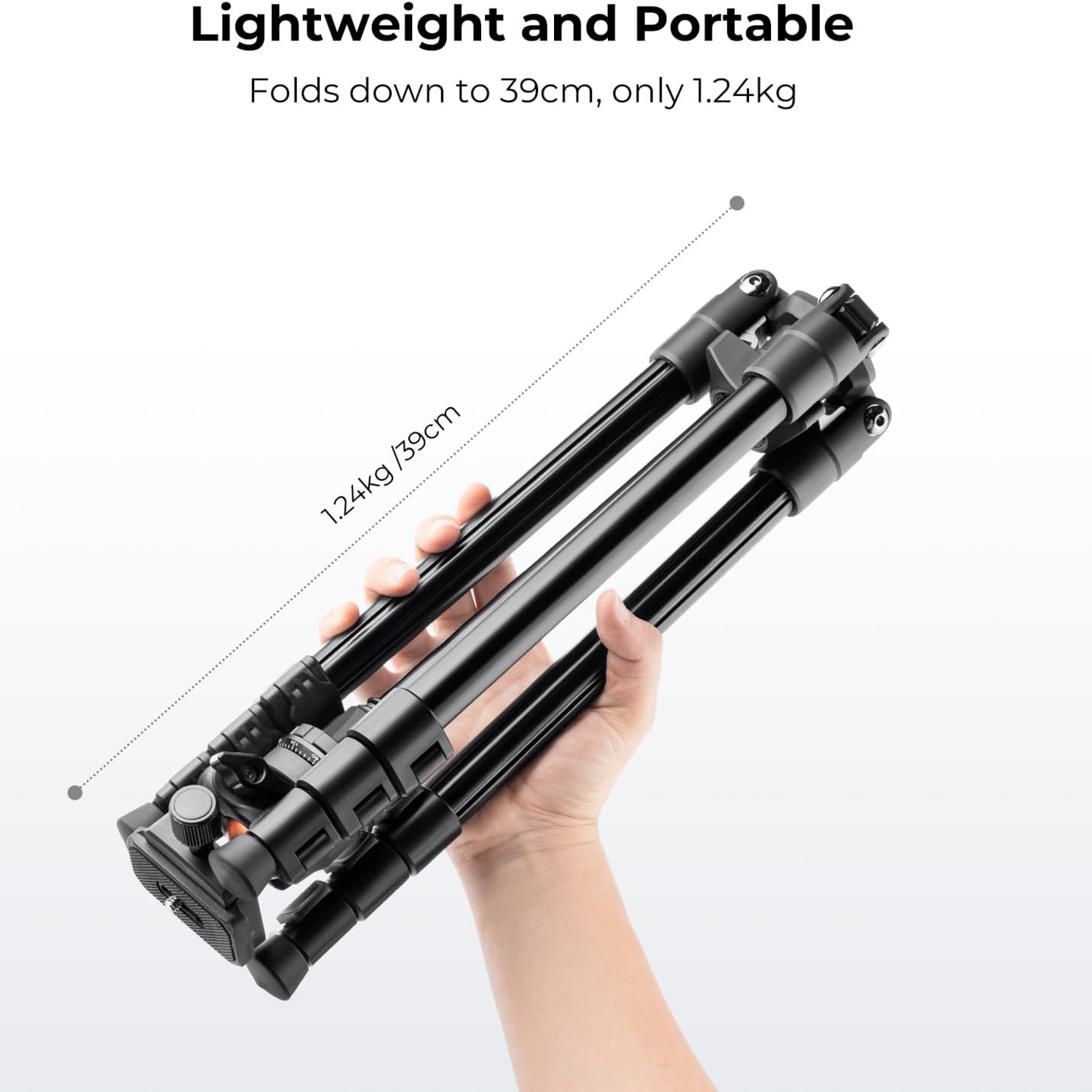
Folded length of 39 cm is the travel number. That fits inside carry-on luggage, lies flat across the bottom of a daypack, and can be strapped to the outside of a pack without sticking out like a flagpole. Shorter folded lengths come from more leg sections, which is why this one has four rather than three.
Weight of 1.15 kg includes the ball head. There is a psychological threshold somewhere around 1.5 kg where a tripod stops feeling like a burden. Sitting under that mark is the difference between gear you carry and gear you own.
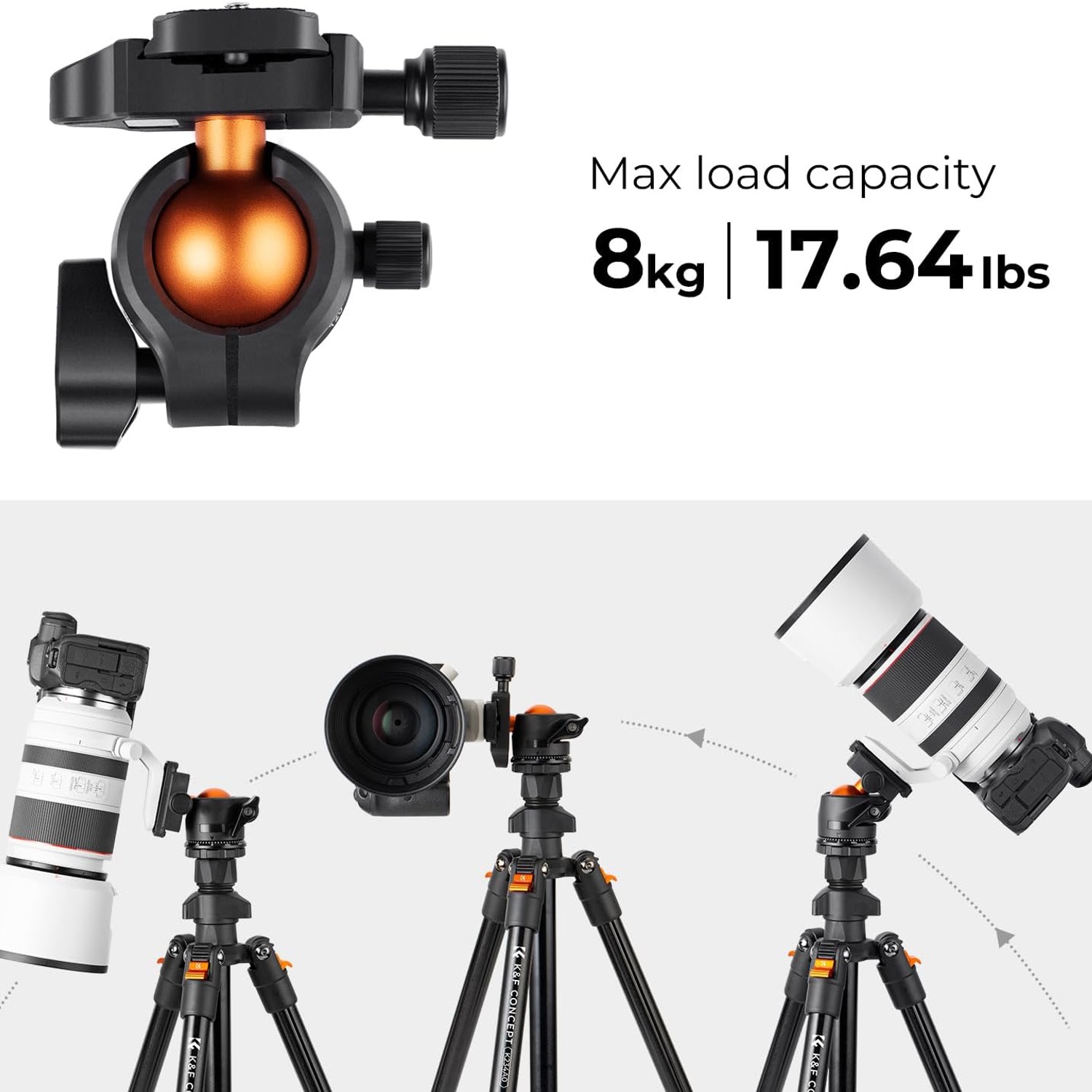
Load rating of 8 kg is the amount of camera the tripod is built to hold. Most people never get close. A mid-range DSLR with a zoom is about 1.5 to 2 kg. Standard advice is to pick a tripod rated for at least double your gear weight, and this one leaves plenty of room.
How the legs and locks work
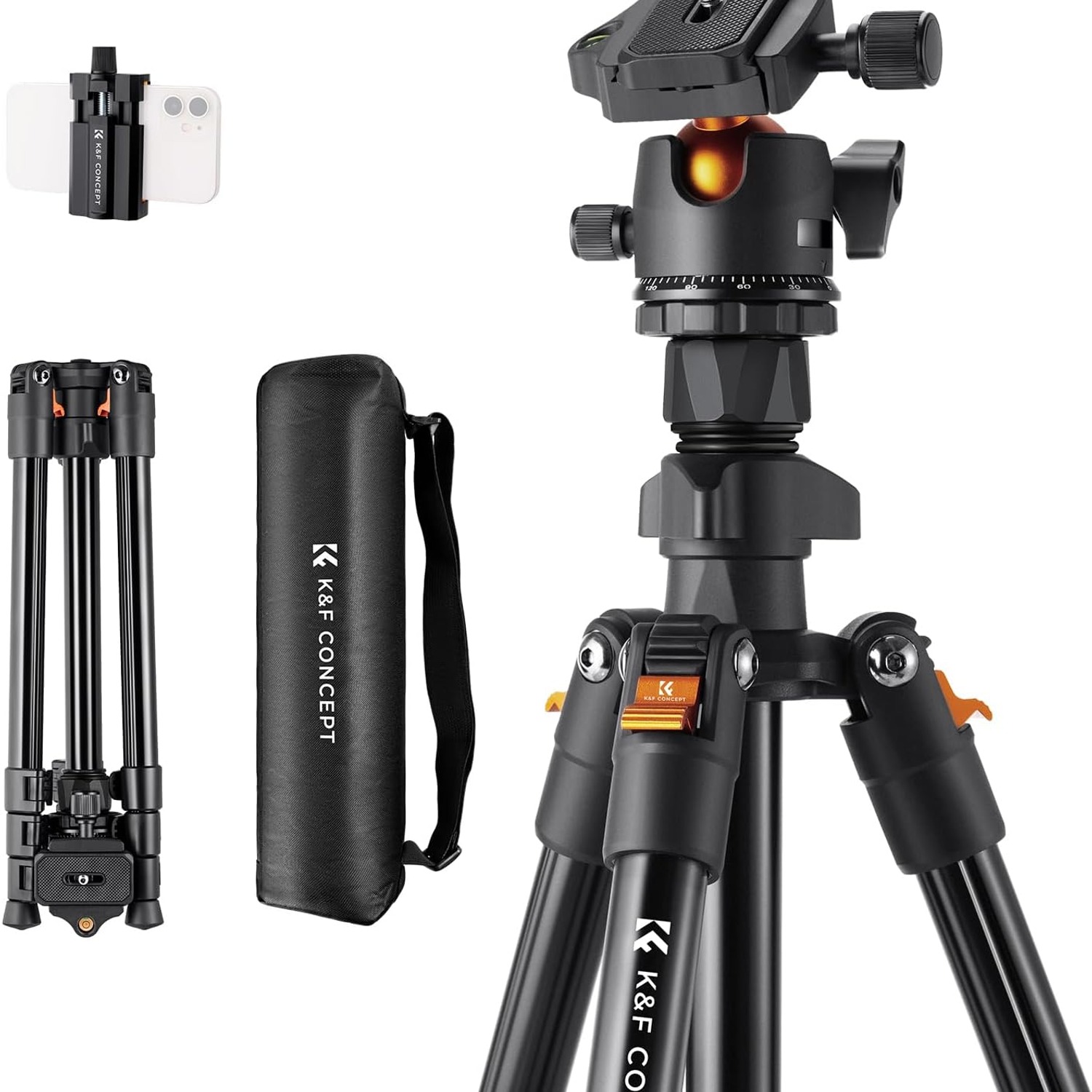
The legs are aluminium in four telescoping sections, held by flip locks. A flip lock is a small lever you push open to release a section and snap shut to hold it. You can flick all three locks on one leg with a single hand motion, extend the leg, and snap them closed again. Do that three times and you are set up.
The other common system is a twist lock, where you rotate a collar to grip the tube. Twist locks are simpler to take apart and clean, which is a real advantage if you shoot a lot on sand or in dust. Flip locks win on raw speed and are easier to operate with cold or gloved hands. Neither is the correct answer for everyone, but if you are setting up and packing down repeatedly through a day, the flip locks pay off.
On the material question, aluminium versus carbon fibre comes down to money. For a tripod of the same size, carbon fibre weighs roughly 30 percent less and handles vibration slightly better. It also costs considerably more. Aluminium takes knocks well, which counts for something when your tripod lives in a car boot. For most people, the best lightweight camera tripod is an aluminium one bought at a sensible price and used often.
The head is the part you touch
Legs hold things up. The head is what you actually interact with, and it is the part people underestimate.
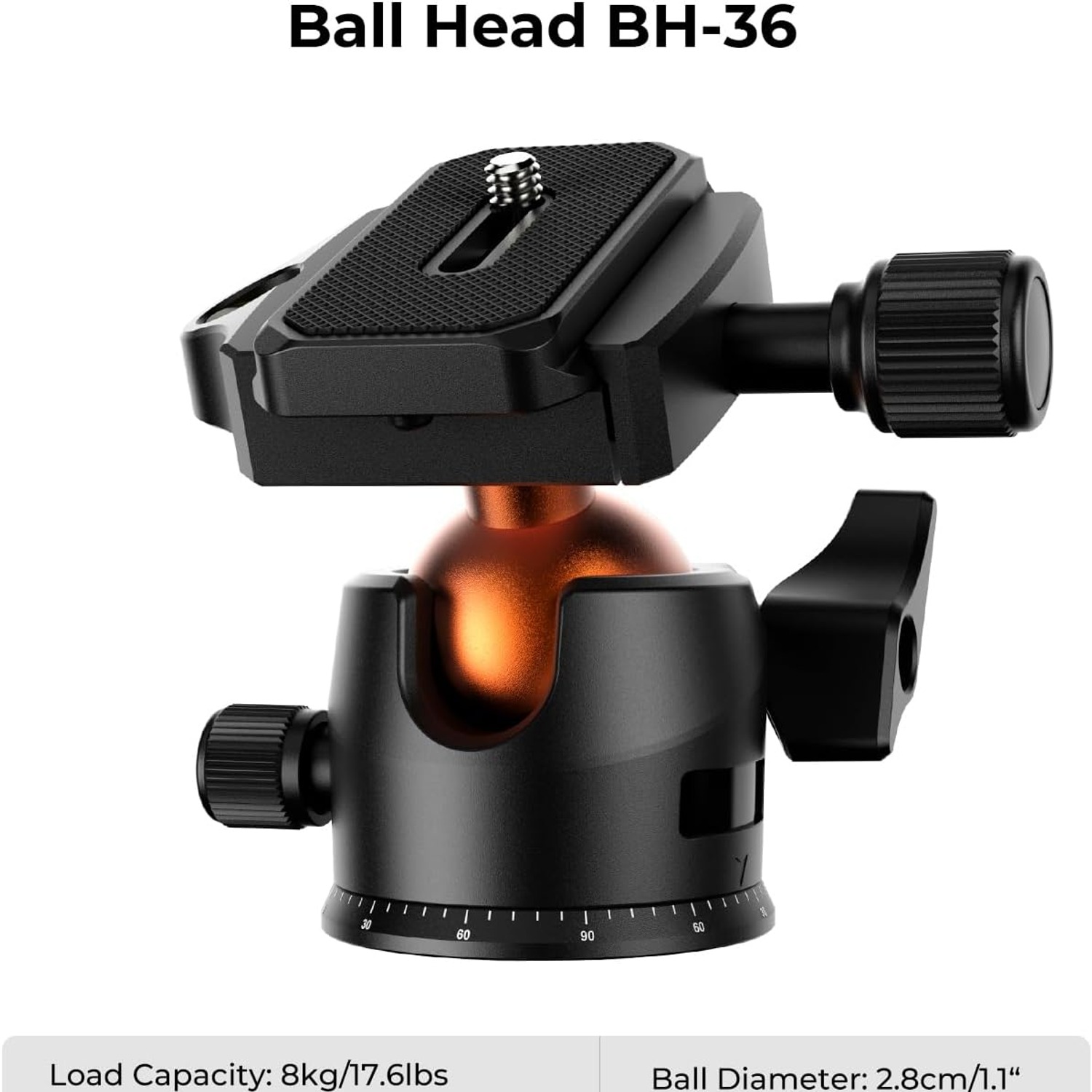
This is a 28 mm metal ball head. The camera sits on a ball clamped inside a housing. Loosen the knob and the camera moves freely in any direction. Find your framing, tighten the knob, and it holds. That is the whole operation, and it is why ball heads dominate travel photography. There is no sequence of three separate knobs to work through.
Separate from the ball is a 360 degree panning base. You level the camera with the ball, lock it off, then rotate only the pan base. The horizon stays level while the camera swings sideways. That is how you shoot a multi-frame panorama that stitches together cleanly, and how you follow something moving across a landscape without the frame tilting.
The included quick release plate is a small thing that changes how often you use the tripod. It screws to the base of your camera and stays there. When you want the tripod, the camera clips in. When you want to go hand-held, it lifts straight out. No screwing and unscrewing while light fades.
Getting low
The centre column on this tripod can be mounted upside down, and a short centre column comes in the box for the same purpose. Both let you drop the camera far closer to the ground than the normal 52 cm minimum.
This opens up a set of shots most people never attempt. Flowers from their own level rather than from above. Insects. Rock pools. Texture in sand or leaf litter. Product photos on a low surface. Shooting from down low also changes landscapes a lot, giving foreground elements real presence against the sky. If you have ever wondered why someone else's photo of the same scene looks more interesting than yours, the answer is often that they got lower.
Choosing well, and using it well
A few things worth thinking about before you buy any tripod.
Match it to your heaviest setup, not your lightest. If you own a long telephoto and plan to use it on this, the extra weight sits further from the centre and puts more strain on the head. Shorter lenses are no concern at all.
Think about where you will use it. A tripod that mostly lives indoors or on calm days has an easy life. One that goes out in wind on exposed clifftops needs a bit of technique: legs spread wide, centre column down, thinnest leg section left retracted, and a bag hung from the column for ballast.
Think about the mount on your other gear too. The standard 1/4 inch thread here fits cameras and many compact projectors and small scopes. Larger telescopes and some heavier gear use a 3/8 inch thread and need a cheap adapter.
For care, the rule is simple. Grit is the enemy. Brush sand and dust off the leg tubes before you collapse them, because anything trapped between sections gets dragged along the tube and scratches it. If you shoot near the sea, rinse the lower legs with fresh water, extend them fully, and let them dry before folding. The tripod is not water resistant, so do not stand it in a stream and walk away.
The short version
This is a four-section aluminium tripod that goes from 52 cm up to 163 cm, folds to 39 cm, weighs 1.15 kg with the head on, and is rated to carry 8 kg. It has a 28 mm metal ball head with a 360 degree pan base, quick flip leg locks, a quick release plate, and the ability to invert the centre column for low-angle shots. The thread is a standard 1/4 inch, so most cameras mount directly.
If you want a tripod for landscapes, travel, night scenes, locked-off video or getting yourself into the family photo, and you want one small enough that carrying it is not a chore, this is the shape of thing that fits. The heavier studio tripods are better in a studio. This one is better on a walk.