Camera Company
Company
Shop By Category
T&Cs
Shop Online
  • The maker's specifications on every page
  • Free tracked delivery across the UK over £100
  • 14-day returns

Camera Cleaning Kit 10 in 1 | Lens pen and air blower kit | Camera lens cleaner

10-in-1 Camera Cleaning Kit with Air Blower, Lens Pen and Microfibre Cloths

£39.99 £47.99 Save £8
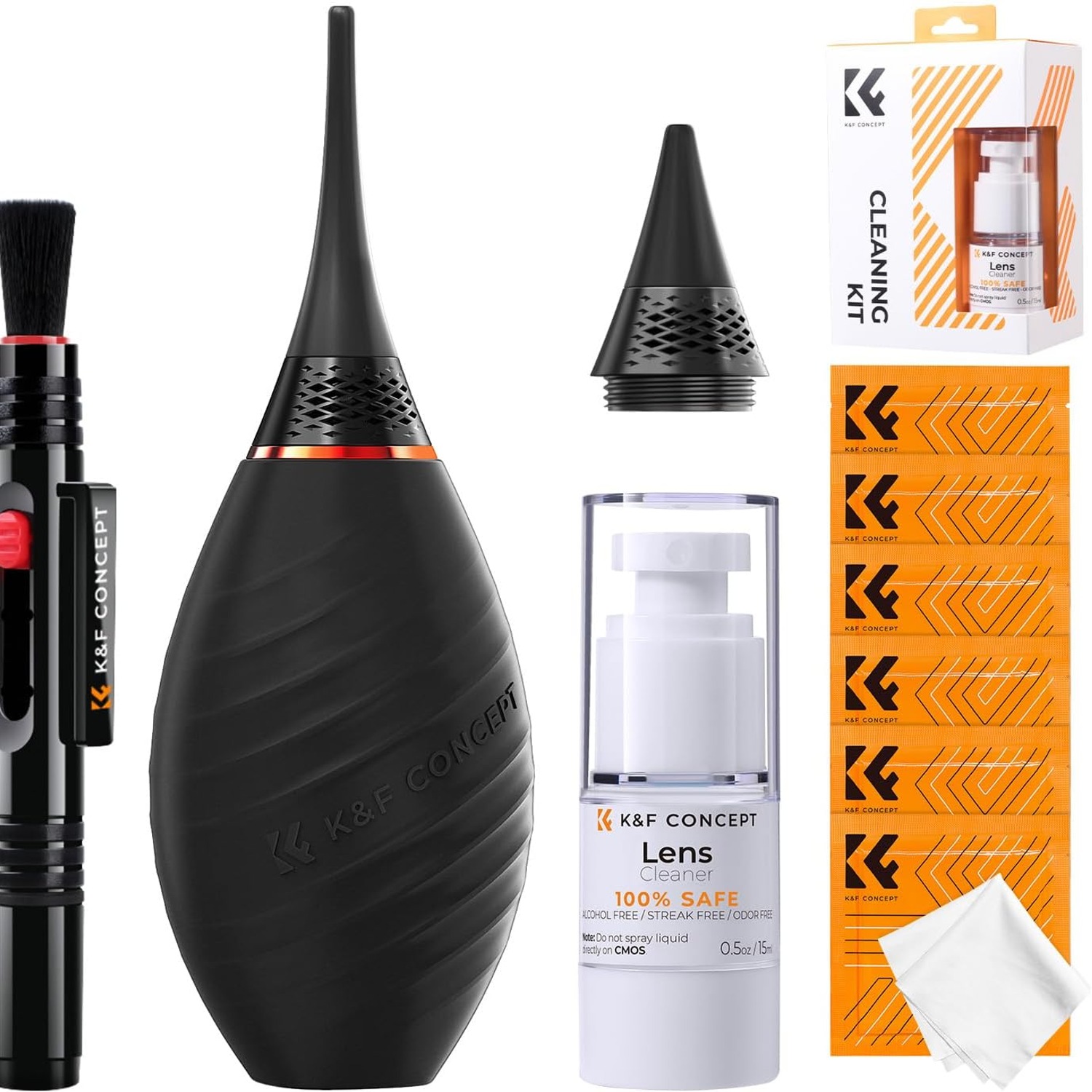
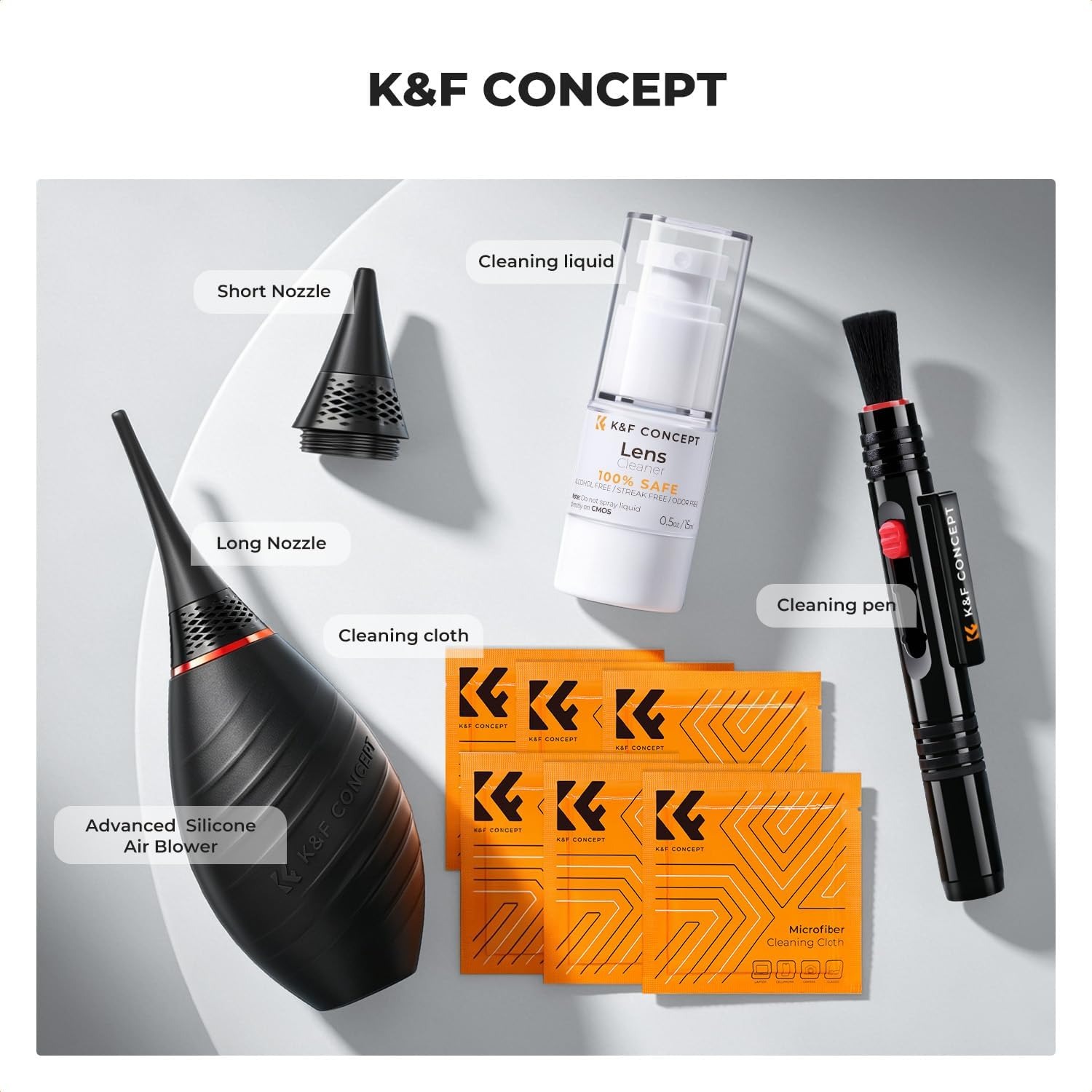
  • Soft Silicone Blower
  • Two Nozzle Lengths
  • Six Sealed Cloths
  • 15ml Optical Fluid

Price: £39.99 £47.99

  • Free tracked delivery across the UK on orders £100+, otherwise a flat £12
  • Pay by card or PayPal, handled by the payment provider
  • 14 days to change your mind, plus your statutory rights
Product specifications
Set Name10-in-1 Camera Cleaning Kit
BrandK&F CONCEPT
Model NumberSKU.2147
Model NameSoft Tip Strong Air Blower
Included ItemsCleaning liquid, cleaning pen, rocket air blower with extension and short nozzle, cleaning cloths
Liquid Volume15 ml
Brush Length4.5 inches
ColourBlack, Red
MaterialMicrofibre, Silicone
Compatible DevicesSLR cameras, digital cameras, computers, mobile phones, other equipment
Water ResistanceNot water resistant
Number of Packs1
Item Weight218 g
Country of OriginChina
Weight218 g
Shipping & returns

Tracked delivery anywhere in the UK. It is free on orders of £100 or more, and a flat £12 below that.

Under the Consumer Contracts Regulations 2013 you have 14 days from delivery to cancel for any reason, and a further 14 days to send it back in resaleable condition. We refund the price you paid, including standard delivery. You cover the cost of returning it unless the item is faulty.

If it arrives faulty, damaged or not as described, we put it right at no cost to you under the Consumer Rights Act 2015, return postage included.

Shipping details · Refunds and returns

Soft Silicone BlowerA soft air nozzle lifts loose dust without touching the glass.
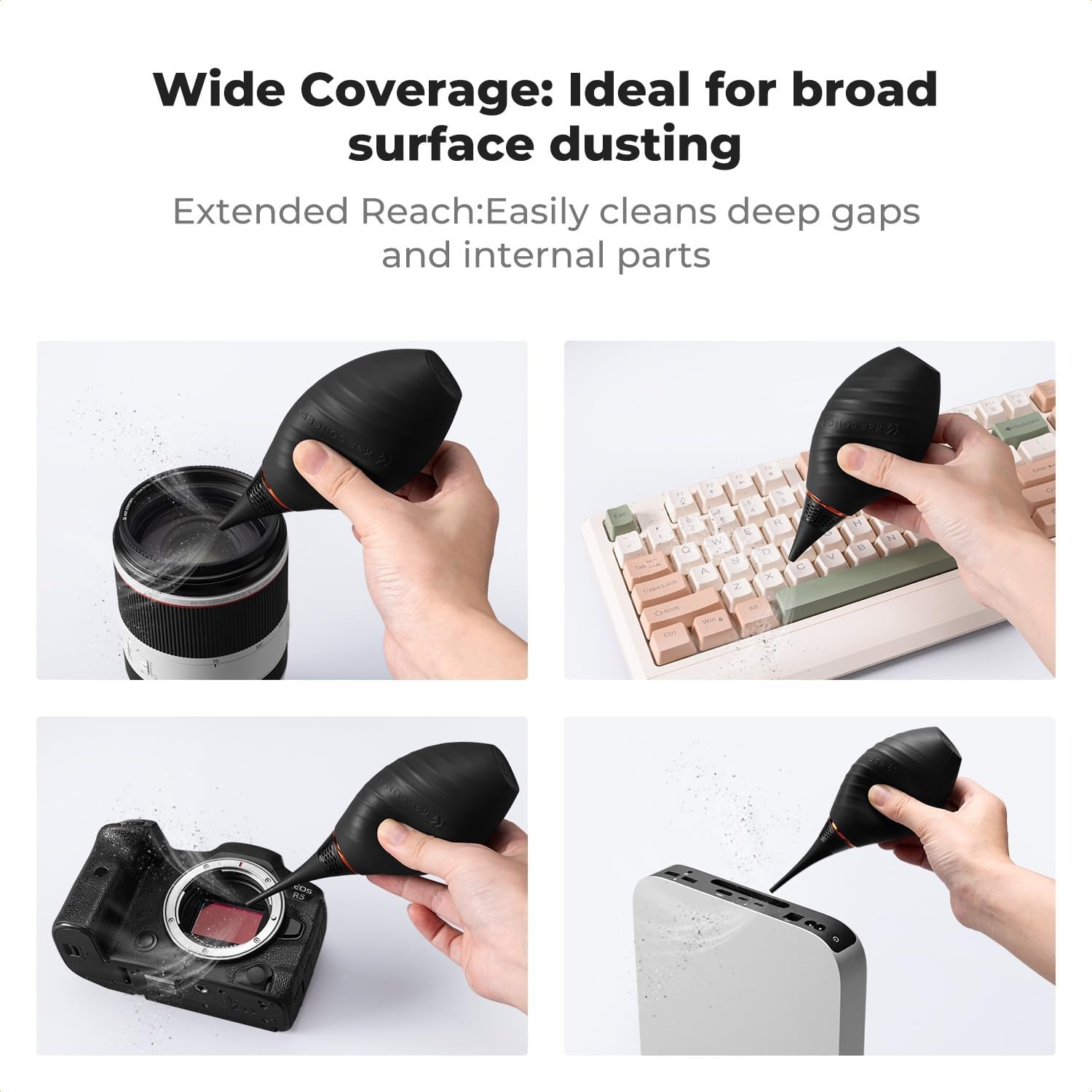
Two Nozzle LengthsLong nozzle reaches sensors and battery bays, short nozzle suits lenses and filters.
Six Sealed ClothsVacuum-packed 15 x 15cm microfibre cloths stay clean until you open them.
15ml Optical FluidPump-head cleaner lifts oil and fingerprints from coated glass.

Keep every shot sharp and spot-free with a camera cleaning kit 10 in 1 that lives in your bag and handles dust, smudges and fingerprints in under a minute.

A soft-tip silicone air blower with swappable long and short nozzles, a dual-end cleaning pen, 15ml of optical cleaning fluid and six vacuum-sealed microfibre cloths, all sized for lenses, sensors, screens and camera bodies.

A 10-in-1 camera cleaning kit that covers the whole job, from blowing off loose grit to polishing out fingerprints on coated glass.

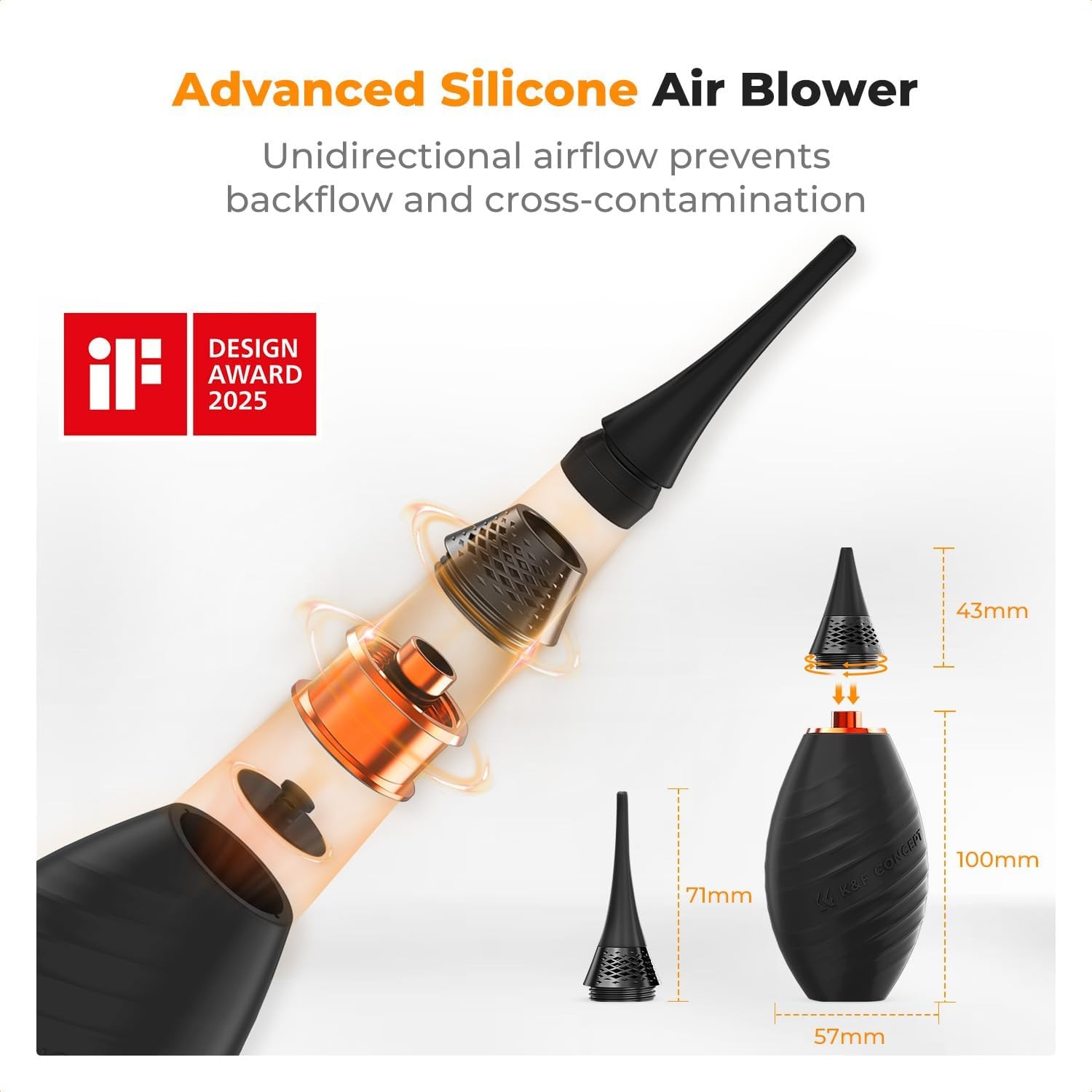
The silicone rocket blower uses one-way air intake so it does not suck dust back in and blow it straight at your sensor.

Swap between the long and short nozzles depending on whether you are reaching into a DSLR mirror box or sweeping a front element.

Six individually vacuum-sealed microfibre cloths mean you always have a fresh, dust-free surface instead of the grubby one in your pocket.

At 218 grams for the whole set, it tucks into a side pocket and travels with you instead of living in a drawer at home.

10-in-1 Camera Cleaning Kit with Air Blower, Lens Pen and Microfibre Cloths

Dust is the quiet thief of image quality. It settles on front elements, hides in the gap around a zoom ring, and sits on a sensor where it shows up as a soft grey blob in every frame shot at a narrow aperture. Most of it is not stuck on. It is simply resting there, waiting for someone to move it. That is what this kit is built for, giving you a sensible order of operations so you remove loose debris first and only touch the glass when you actually need to.

10-in-1 Camera Cleaning Kit with Air Blower, Lens Pen and Microfibre Cloths

The air blower is the first tool you reach for. It is moulded from silicone with a soft tip, so if it bumps a front element while you are working at an awkward angle, nothing gets scratched. The one-way intake matters more than it sounds. Cheap bulb blowers draw air back in through the same hole they just blew out of, which means they inhale the dust you dislodged and fire it back at the next squeeze. This one takes air in separately. Two nozzles thread on, a short one for lenses, filters, mirrorless sensors and body panels, and a longer extension for reaching into a DSLR mirror box, a battery compartment or the recess around a viewfinder.

10-in-1 Camera Cleaning Kit with Air Blower, Lens Pen and Microfibre Cloths

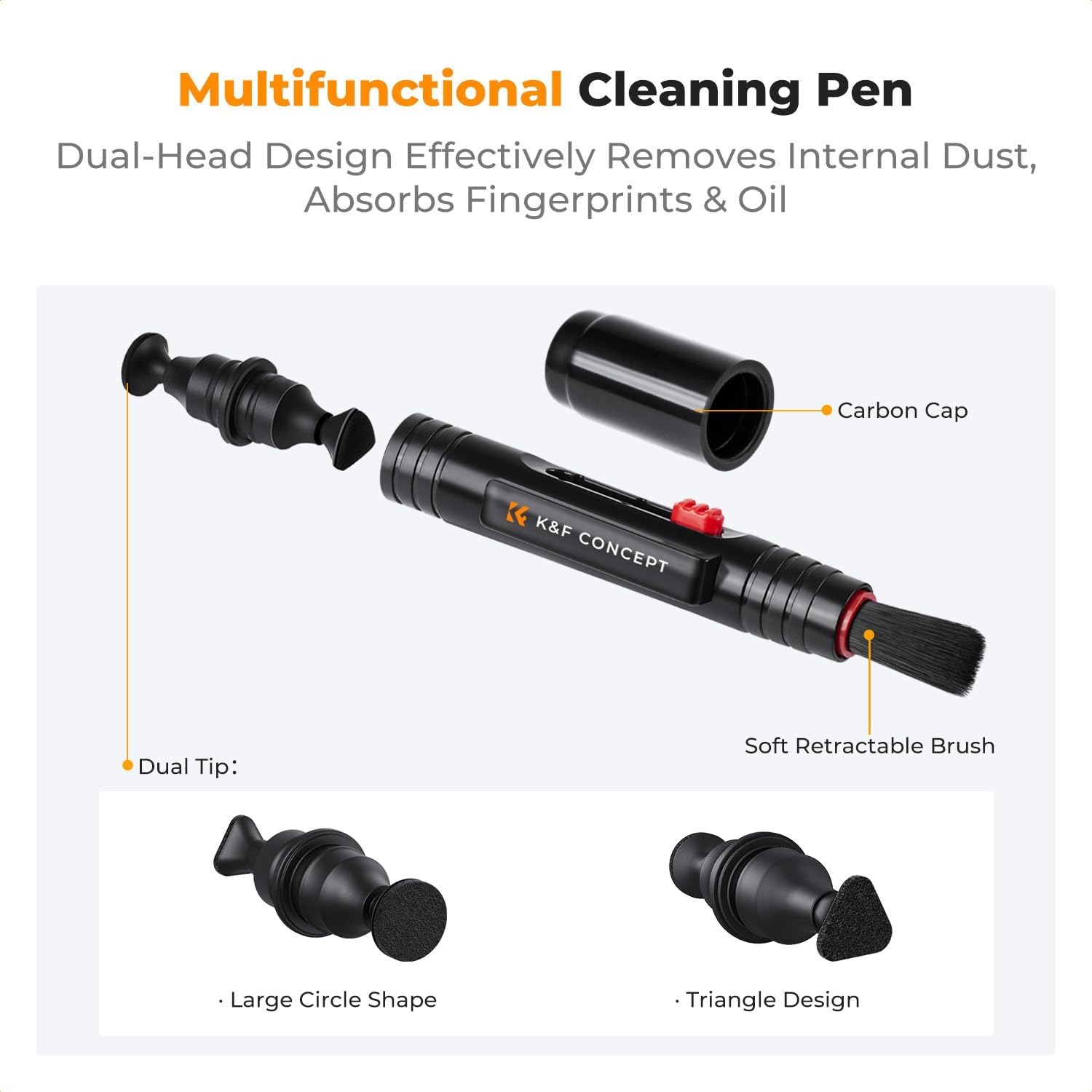
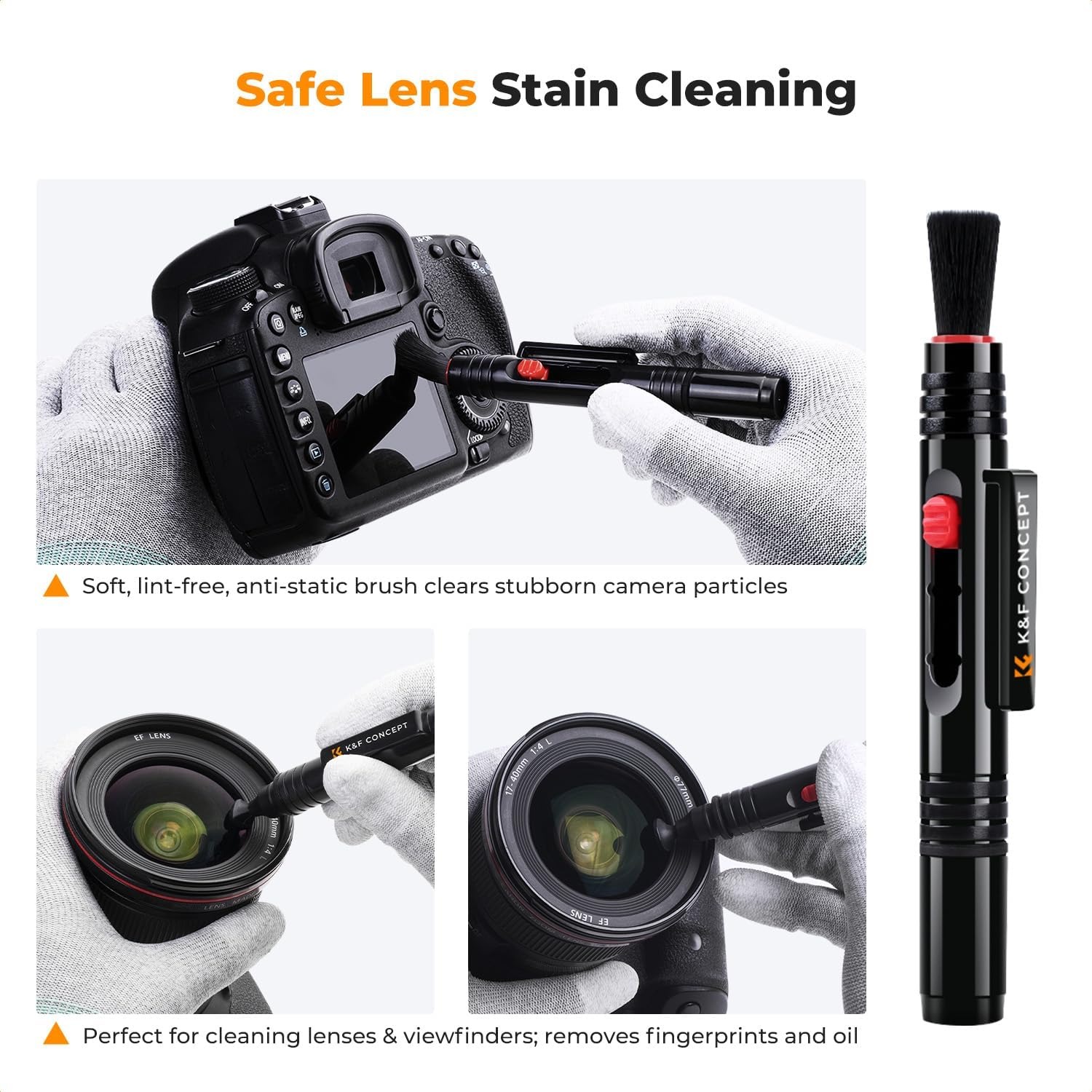
When air is not enough, the dual-end cleaning pen handles what is left. The retractable brush, 4.5 inches long, sweeps grit out of lens threads, hot shoe slots and the seam where a lens barrel meets the mount. The carbon tip on the other end is for fingerprints and the faint oily haze that builds up on a front element over a season of shooting. A light circular motion from the centre outward is all it takes, and because the tip is dry, there is no liquid running toward the edge of the element.

10-in-1 Camera Cleaning Kit with Air Blower, Lens Pen and Microfibre Cloths

The 15ml bottle of optical cleaning fluid is the finisher for the marks a dry tool will not shift, like sunscreen, sea spray or a thumbprint pressed hard into a filter. The vacuum pump head puts a measured amount onto a cloth rather than dumping it, which keeps fluid off the barrel and away from the edges of coated glass. Never spray it directly onto a lens or a screen. Dampen the cloth, wipe, then follow with a dry section of the same cloth.

10-in-1 Camera Cleaning Kit with Air Blower, Lens Pen and Microfibre Cloths

Six microfibre cloths come individually vacuum sealed at 15 x 15cm each. That size is deliberate. It is big enough to fold into quarters so you always have a clean face to turn to, and small enough to fit a jacket pocket. Sealed packaging means the cloth you open on a shoot is genuinely dust free, not the one that has been rolling around a camera bag collecting sand. The edges are cut to resist fraying, so pulling one out in a hurry does not leave fibres on your glass. The whole set weighs 218 grams, which is less than most spare batteries and a lens cap combined.

Not sure yet? That is fine.

A camera has to suit the job you bought it for, and you cannot always judge that from a photograph. Under the Consumer Contracts Regulations 2013 you have 14 days from delivery to cancel for any reason, and a further 14 days to send it back in resaleable condition. We refund the price you paid, including standard delivery.

If it turns up faulty, damaged or not as described, that is on us. The Consumer Rights Act 2015 covers you, and we pay the return postage. Read the full detail on our refunds and returns page, or ask us anything before you order.

Frequently Asked Questions

What exactly comes in the 10-in-1 camera cleaning kit?

The set includes a rocket air blower with a short nozzle and a long extension nozzle, a dual-end cleaning pen, a 15ml bottle of optical cleaning liquid and six individually vacuum-sealed microfibre cloths. Everything is aimed at the same job, which is removing dust and smudges from camera gear without scratching anything. It is a complete starting point rather than a single tool.

Will this work with my camera brand?

Yes. None of the tools are brand specific, so they work on Canon, Nikon, Sony, Fujifilm, Panasonic, Olympus, Pentax and anything else with glass and a screen. The kit is listed as suitable for SLR cameras, digital cameras, computers, mobile phones and other equipment. If it has a lens or a display, these tools apply.

Is it safe to use on a camera sensor?

The air blower is the sensor-safe part of this kit. You hold the camera face down, open the shutter in sensor cleaning mode, and puff air across the sensor without the nozzle ever touching it. The cleaning pen and cloths are intended for lenses, filters, screens and bodies, not for direct contact with a bare sensor.

What is the difference between the long and short nozzles?

The short nozzle gives a broader puff and is easier to aim at lenses, filters, mirrorless sensors and body panels. The long extension nozzle reaches deeper, which helps with DSLR mirror boxes, battery compartments and the recesses around a viewfinder. They thread on and off in a second, so you can swap mid-job.

Why does one-way air intake matter in a blower?

A basic bulb blower refills through the same opening it blows out of, which means it inhales the dust you just dislodged. The next squeeze sends that dust straight back at your gear. One-way intake pulls fresh air in through a separate path, so each puff is cleaner than the last. It is one of the clearest markers of a good camera air blower.

Can I use the cleaning fluid on a coated lens?

Yes, it is formulated as an optical cleaner for lenses. Apply it to a microfibre cloth rather than directly to the glass, then wipe gently from the centre outward. Keeping fluid off the edges of the element protects the seals and stops liquid wicking into the barrel.

How much cleaning liquid is included?

The bottle holds 15 millilitres. Because you only need a couple of pumps onto a cloth each time, that goes a surprisingly long way. Most people get through a season of regular shooting before the level drops noticeably.

Should I spray the fluid straight onto my camera screen?

No. Spraying directly onto any screen or lens risks liquid running into seams and under bezels. Pump a small amount onto the microfibre cloth, wipe the screen, then buff dry with an unused section of the same cloth.

How big are the microfibre cloths?

Each cloth measures 15 x 15cm. That is large enough to fold into quarters so you can rotate to a clean face as you work, and compact enough to slip into a pocket or a camera bag divider. Six come in the set.

Why are the cloths vacuum sealed individually?

A microfibre cloth only helps if it is clean. Loose cloths pick up grit in a bag, and that grit is exactly what scratches coatings. Sealed packs mean the cloth you open on location has never touched anything, which is why this is a sensible travel camera cleaning kit.

Can I wash the microfibre cloths?

Yes. Wash them on a gentle cycle in warm water without fabric softener, because softener coats the fibres and ruins their grip on oils. Let them air dry rather than tumble drying, and keep them away from lint-producing laundry. Replace any cloth that looks permanently grey.

What is the cleaning pen for?

It has two ends. The retractable brush sweeps loose grit out of lens threads, hot shoe slots and barrel seams, while the carbon tip on the other end lifts fingerprints and oily haze from glass. It is the tool you use after the blower and before the fluid.

How long is the brush on the cleaning pen?

The brush measures 4.5 inches. It retracts into the body so the bristles stay straight and protected between uses, which is what keeps a lens cleaning pen worth carrying rather than something you throw out after a month.

In what order should I use the tools?

Start with the air blower to lift anything loose, since dragging grit across glass is what causes scratches. Then use the brush end of the pen for stubborn particles in crevices. Use the carbon tip for dry smudges, and only reach for the fluid and a cloth when something has actually stuck.

Is this suitable for a complete beginner?

Very much so. The tools are forgiving, there is nothing to calibrate, and the main rule is simply air first, contact last. If you are looking for a lens cleaning kit for beginners, having the right pieces in one pouch removes most of the guesswork.

Will it clean camera filters as well?

Yes, and filters are often the dirtiest part of a setup because they sit at the front and take all the fingerprints. The short nozzle, the carbon tip and a drop of fluid on a cloth handle UV, polarising and ND filters without trouble.

Can I use it on binoculars, telescopes or spotting scopes?

Yes. Coated optical glass behaves the same way regardless of what it is bolted to. The same sequence of air, brush, dry tip and then fluid works on binocular objectives and eyepieces.

Does it work on phone cameras and laptop screens?

It does. The product is listed as compatible with mobile phones, computers and other equipment as well as cameras. A phone lens is small, so a short puff of air and a light pass with a dry cloth usually sorts it.

What colour is the kit?

The components are black and red. The blower body and pen are the main coloured pieces, which has the practical benefit of being easy to spot in a dark camera bag.

How much does the whole set weigh?

The total listed weight is 218 grams. That is light enough that it does not change how a bag feels, which matters because a cleaning kit left at home does nothing for your photos.

What materials are used?

The listing specifies microfibre and silicone. Silicone makes the blower soft enough that a bump against a front element does not scratch it, and microfibre is the standard choice for lifting oils off coated glass without abrasion.

Is the kit water resistant?

No. It is listed as not water resistant, so keep it out of rain and do not submerge any part of it. Store it somewhere dry, especially the cloths, since damp microfibre can develop a smell and lose its lift.

How often should I clean my lenses?

Blow off dust before most shoots, because that takes ten seconds and prevents most problems. Save fluid and contact cleaning for when you can actually see a mark through the viewfinder or on a test frame. Over-cleaning wears coatings faster than dust ever will.

Can over-cleaning damage a lens?

It can. Every contact wipe is a tiny amount of friction on the coating, so the goal is the fewest passes that get the job done. This is why the blower is always the first step and the fluid is the last resort.

Where is this product made?

The country of origin is listed as China. The brand is K&F CONCEPT and the model number is SKU.2147.

Does it come with a case or pouch?

The listed contents are the blower with both nozzles, the cleaning pen, the 15ml fluid bottle and six sealed cloths. Any storage packaging beyond that is not specified by the maker, so it is best not to assume a dedicated case is included.

Would this make a good gift for a photographer?

It is one of the safer photography gifts, because it suits any camera and every photographer eventually needs one. Beginners who have just bought their first interchangeable lens camera tend to appreciate it most, since cleaning gear is rarely the first thing they buy for themselves.

How is the order delivered and tracked?

Your order is dispatched once payment clears and you receive tracking details by email as soon as it ships. Delivery timing depends on your location, and the tracking link updates as the parcel moves. Contact us if a tracking number has not appeared after a reasonable window.

What is the returns process?

If something is wrong with the item on arrival, get in touch with your order number and a photo of the problem and we will sort out a replacement or refund. For change-of-mind returns, the kit needs to be unused with the cloth packs still sealed. We will walk you through the return steps by email.

What if the kit is not right for what I need?

Tell us what you were trying to clean and what did not work, because quite often it is a technique issue rather than a product one and a two-line reply solves it. If it genuinely is not the right kit for your gear, we will arrange a return within the returns window. We would rather you end up with the right tools than keep something that sits unused.

How to Clean Camera Gear Without Scratching It, A Practical Buyer's Guide

6 min read Camera Company

The problem nobody warns you about

You buy a camera. You buy a lens. Nobody mentions that within about three months, there will be a grey smudge on the front element, a crumb of something in the lens threads, and a soft dark blob in the top corner of every photo you take at f/16.

That last one is sensor dust, and it is the one that makes people panic. It looks like a defect. It usually is not. It is a speck sitting on the sensor stack, and in most cases a few puffs of clean air removes it completely.

The honest truth about camera cleaning is that most of it is easy, and the mistakes people make come from doing things in the wrong order. Reaching for a cloth before you have blown off the grit is how lenses get scratched. A good camera cleaning kit 10 in 1 is really just a way of making sure the right tool is within reach at the right moment.

How the tools actually work together

Think of cleaning as a ladder. You start at the gentlest rung and only climb if you have to.

Air comes first. The silicone rocket blower moves loose particles off a surface without anything touching it. No friction, no risk. This handles the large majority of what lands on your gear, because dust is not glued on, it is just sitting there. The soft tip means an accidental bump against glass does nothing.

The blower in this kit uses one-way air intake, and that detail is worth understanding. A simple bulb blower refills through the same hole it exhales through. Squeeze it, and it blows dust away. Release it, and it sucks that same dust back inside. Next squeeze, the dust comes out again, now aimed at your sensor. Separate intake means every puff is drawing in fresh air from behind, not recycling the mess.

Two nozzles thread onto the body. The short one is wider and easier to aim for front elements, filters, mirrorless sensors and body panels. The long extension gets into places your fingers cannot, like a DSLR mirror box, a battery bay, or the channel around an eyepiece. Swapping takes a couple of seconds.

Brush second. The cleaning pen has a retractable brush, 4.5 inches long, for particles that air will not move. These tend to be the slightly sticky ones lodged in threads, in the gap where a zoom ring meets the barrel, or in the hot shoe slot. Brush away from the glass, not across it.

Dry contact third. The carbon tip on the other end of the pen deals with fingerprints and the faint oily film that builds on a front element over time. Light pressure, small circles, working from the middle outward. Because it is dry, there is no liquid creeping toward the edge of the element and into the barrel seal.

Fluid last. The 15ml bottle of optical cleaner is for things that genuinely will not budge, like sunscreen, sea spray, or a thumbprint pressed hard into a filter. Pump a small amount onto a microfibre cloth. Never onto the lens itself. Wipe, then buff dry with a clean section of the same cloth.

Why the cloths come sealed

Six microfibre cloths, each 15 x 15cm, each in its own vacuum pack. This is not packaging theatre.

A microfibre cloth works by trapping oil in tiny fibres. It only does that job while it is clean. A cloth that has been loose in a camera bag for six weeks has collected sand, lint and whatever else lives in the bottom of your bag, and every one of those particles is harder than the coating on your lens. Dragging that across glass is how a lens picks up fine scratches that never come out.

Opening a sealed pack guarantees the cloth has touched nothing. It is the single easiest way to avoid the most common cause of self-inflicted lens damage.

The 15 x 15cm size is also chosen well. Fold it into quarters and you have four clean faces to work through before it needs washing. The edges are cut to resist fraying, so pulling one out in a hurry does not leave fibres stuck to your front element.

Who this suits

New camera owners. If you have just bought your first interchangeable lens camera, this is the accessory that stops small problems becoming expensive ones. Cleaning gear is rarely the first purchase people make, which is exactly why it makes such a useful gift.

Travel and landscape shooters. Beaches, deserts and windy clifftops are hard on equipment. Salt spray and fine sand are the two worst things for glass, and both need dealing with the same day rather than next week. At 218 grams the whole kit comes with you.

Anyone who changes lenses outdoors. Every lens swap in open air is an invitation for dust to land on the sensor. You cannot avoid it, but you can clear it in a minute with the long nozzle.

Videographers and content creators. Dirty glass shows up far more obviously in moving footage than in a single still, especially when you are shooting into a light source and every smudge turns into a haze.

People with more than cameras. The kit is listed as working on digital cameras, computers, mobile phones and other equipment. Phone lenses, laptop screens, binoculars and spotting scopes all respond to the same routine.

How to choose a cleaning kit

If you are comparing options, here is what actually separates a good kit from a cheap one.

Look at the blower first. Soft tip, decent air volume, one-way intake. A hard plastic nozzle on a cheap blower is a scratch waiting to happen, and no intake valve means it recycles dust. The nozzle options matter too, since one length cannot reach both a front element and the back of a mirror box comfortably.

Check how the cloths are packaged. Loose cloths in a plastic sleeve are a false economy.

Check the fluid delivery. A pump head gives you a controlled dose on a cloth. A squeeze bottle gives you a puddle, and puddles run into seams.

Then ignore the sticker count. Kits advertising twenty or thirty pieces often pad the number with cotton swabs and sachets you will never open. What matters is whether each piece earns its place, and whether the set is small enough to actually travel with you. The best camera maintenance kit is the one in your bag, not the complete one sitting in a drawer at home.

Looking after the kit itself

Keep the blower nozzle covered or bagged so it does not fill with dust while it sits in your bag. Before the first puff of any session, squeeze it two or three times pointed away from your gear to clear anything that has settled inside.

Retract the pen brush after every use. Bristles left out get bent, and bent bristles push grit around instead of lifting it.

Store the fluid upright with the pump closed. Keep the whole kit dry, since it is not water resistant.

Wash cloths on a gentle warm cycle with no fabric softener, because softener coats the fibres and destroys their grip on oils. Air dry them. When a cloth stays grey after washing, retire it to body and bag duty and open a fresh pack for glass.

A quick word on restraint

More cleaning is not better cleaning. Every contact wipe puts a small amount of friction on a lens coating. Do it weekly for years and you will see the effect.

Blow dust off before you shoot, because that takes ten seconds and costs nothing. Save the pen and the fluid for marks you can actually see affecting an image. A lens with a few specks of dust on the front element produces photos that are, in practical terms, identical to a spotless one. A lens with worn coatings does not.

Sensor dust is different and worth dealing with, because it shows up repeatably in the same spot at narrow apertures. Air first, always. If air does not shift it after several attempts, that is the point to consider a professional clean rather than escalating to something more aggressive yourself.

The short version

Dust and fingerprints are normal, not a sign you have done something wrong. The fix is simple if you work in the right order.

Air lifts the loose stuff and handles most problems on its own. The brush gets into threads and crevices. The dry carbon tip takes care of fingerprints. The fluid and a fresh sealed cloth finish anything genuinely stuck. Six individually packed cloths mean you never have to use a dirty one, and the whole set weighs about as much as a spare battery, so it comes with you.

Buy it once, keep it in the bag, use it before shoots rather than after disasters. Your images stay sharp, and your lenses keep their resale value.

Browse the shop

Not sure where to start?

Tell us what camera and lenses you shoot with and we will point you to the right cleaning routine for your gear.

Ask us a question

Page summary

This is a K&F CONCEPT 10-in-1 camera cleaning kit, model SKU.2147, intended for cleaning the sensor, lens, screen, body surface and gaps of SLR cameras, and also usable on digital cameras, computers and mobile phones. The set includes a soft-tip silicone rocket air blower with interchangeable long and short nozzles, a dual-end cleaning pen with a 4.5 inch brush, a 15ml bottle of optical cleaning liquid with a pump head, and six individually vacuum-sealed microfibre cleaning cloths. Colours are black and red, materials are microfibre and silicone, and total weight is 218 grams. Country of origin is China. The kit is not water resistant. Overall product dimensions are not specified by the maker, and no GTIN is listed.