
The complete guide
How to Choose a Mini Phone Tripod That You Will Actually Carry
The problem with holding your phone
Phone cameras have become very good. The sensor, the lens and the software can handle a lot. What they cannot handle is you.
Hold a phone at arm's length and your hand moves constantly. In bright light the shutter is fast enough to freeze that movement, so you never notice. Step into a restaurant at night, shoot a sunset, try a long exposure of a waterfall, or record a two minute video to camera, and the wobble shows up immediately. Photos go soft. Video drifts and sways in a way that makes people click away.
Then there is the other problem. If you are holding the phone, you are not in the picture. Group shots end up with one person missing or a stranger roped in to press the button. Solo video means setting the timer, sprinting into frame and arriving out of breath.
A mini phone tripod solves both at once. It gives the camera a fixed point to sit on, and the remote lets you trigger it from a distance. That is the whole idea, and it is why a 87 gram accessory makes a bigger difference than most phone upgrades.
How this one works
There are three parts worth understanding.
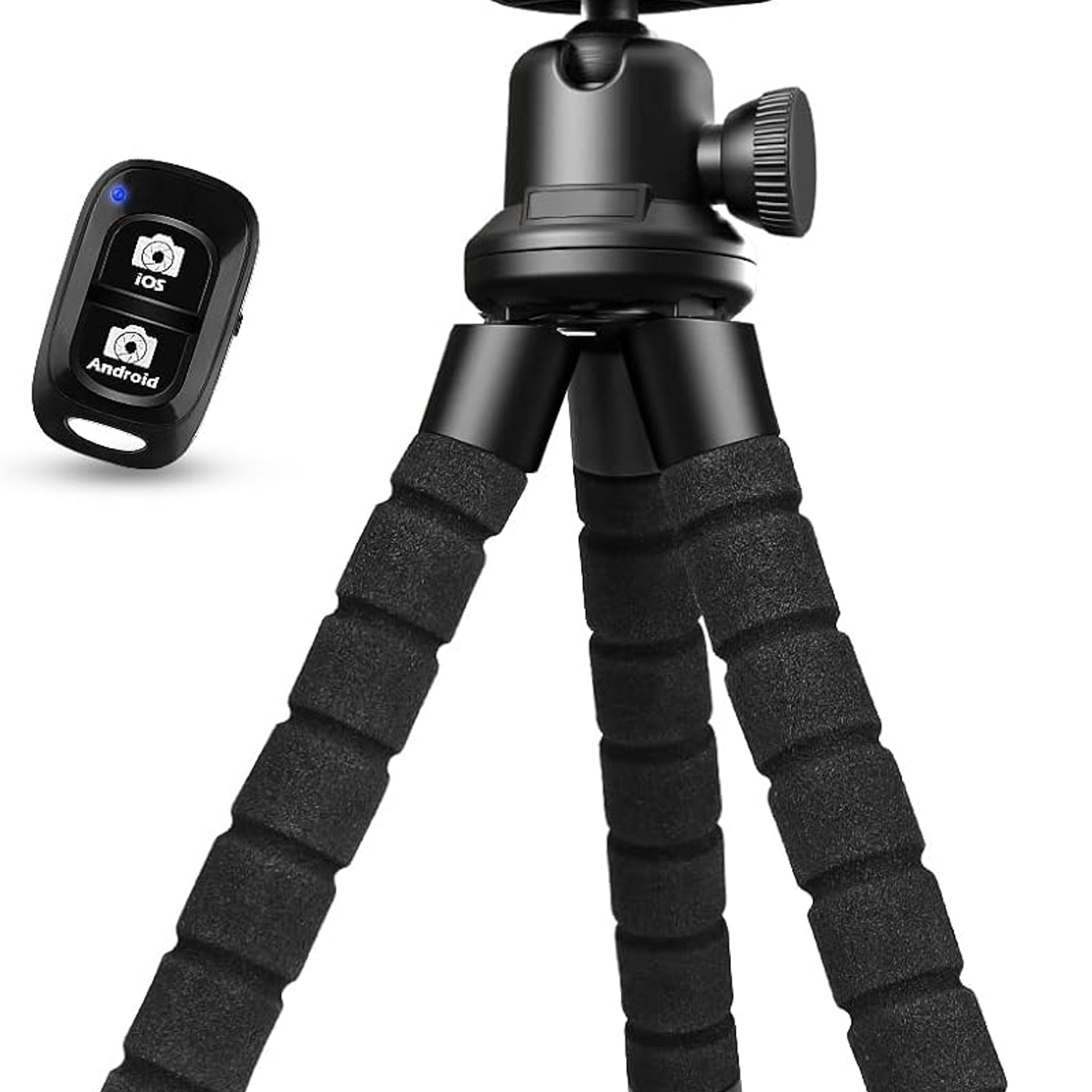
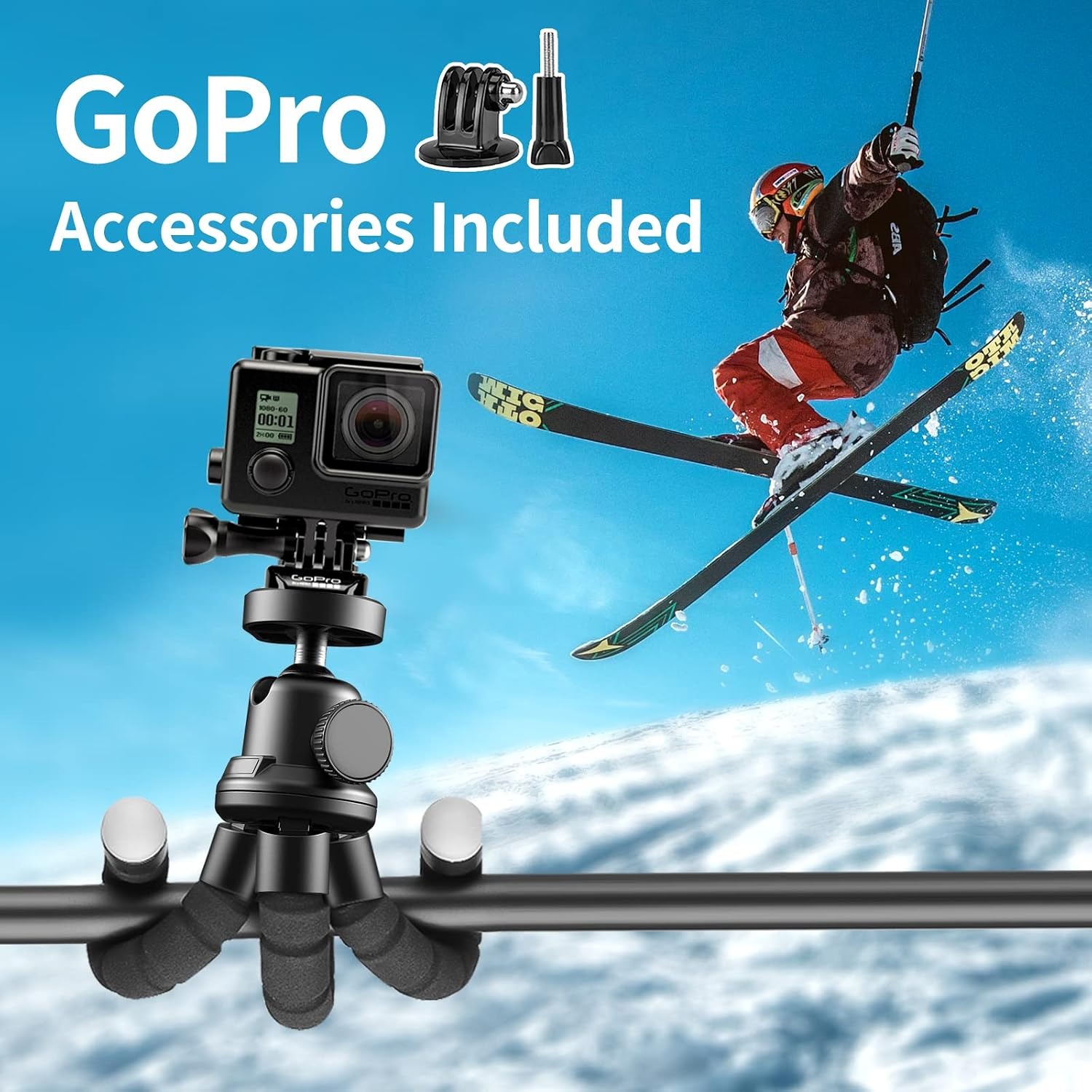
The legs are flexible metal, wrapped in foam and finished with rubber feet. Flexible is the key word. On a table they splay out and act as a normal tabletop stand. Out in the world you bend them. Wrap one leg around a railing, loop another over a branch, hook it onto a backpack strap, and the tripod stays where you put it. The foam gives the legs some bulk so they are comfortable to hold, and the rubber feet stop the whole thing sliding on polished surfaces.
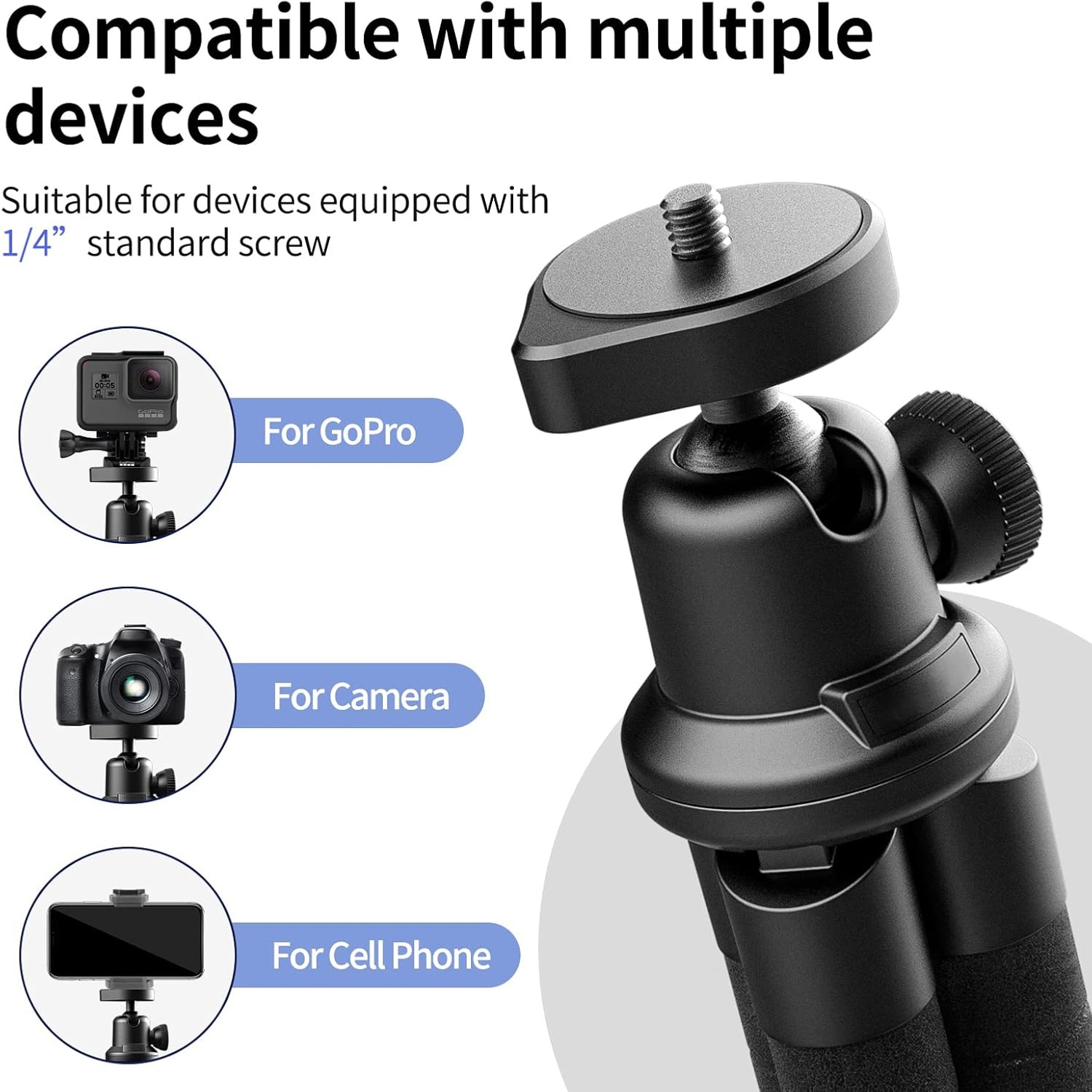
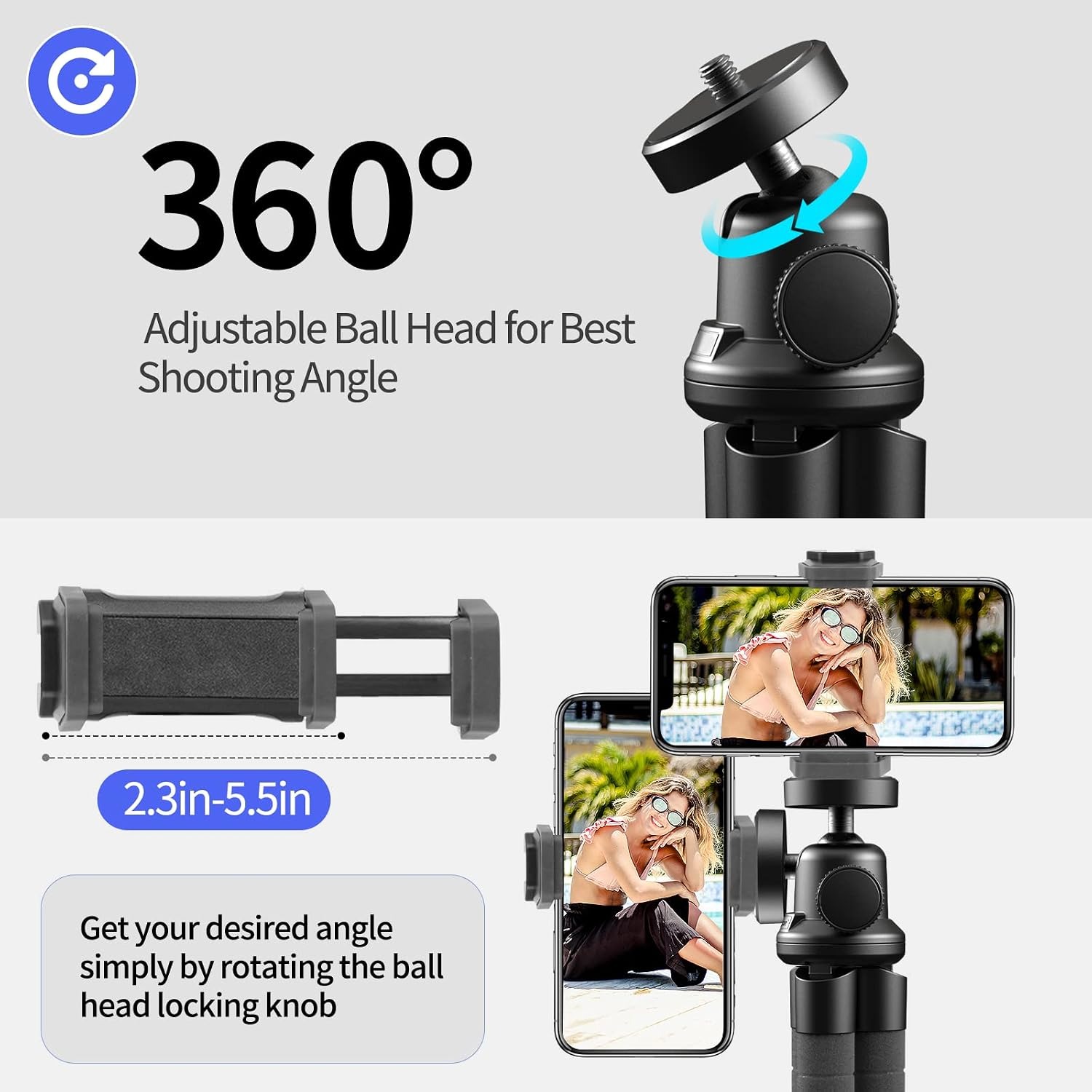
The head is a 360 degree ball joint. Loosen it, point the phone, tighten it. It takes about a second to go from a wide horizontal frame to a vertical one, which matters if you shoot for social video and also want a proper landscape photo of the same view. Precise angle control is the difference between a straight horizon and one that needs cropping later.
The clamp is spring-loaded and sized for phones between 2.3 and 5.5 inches wide. Pull it open, drop the phone in, let it close. Most iPhones and most Android handsets sit in that range, including with a slim case on.
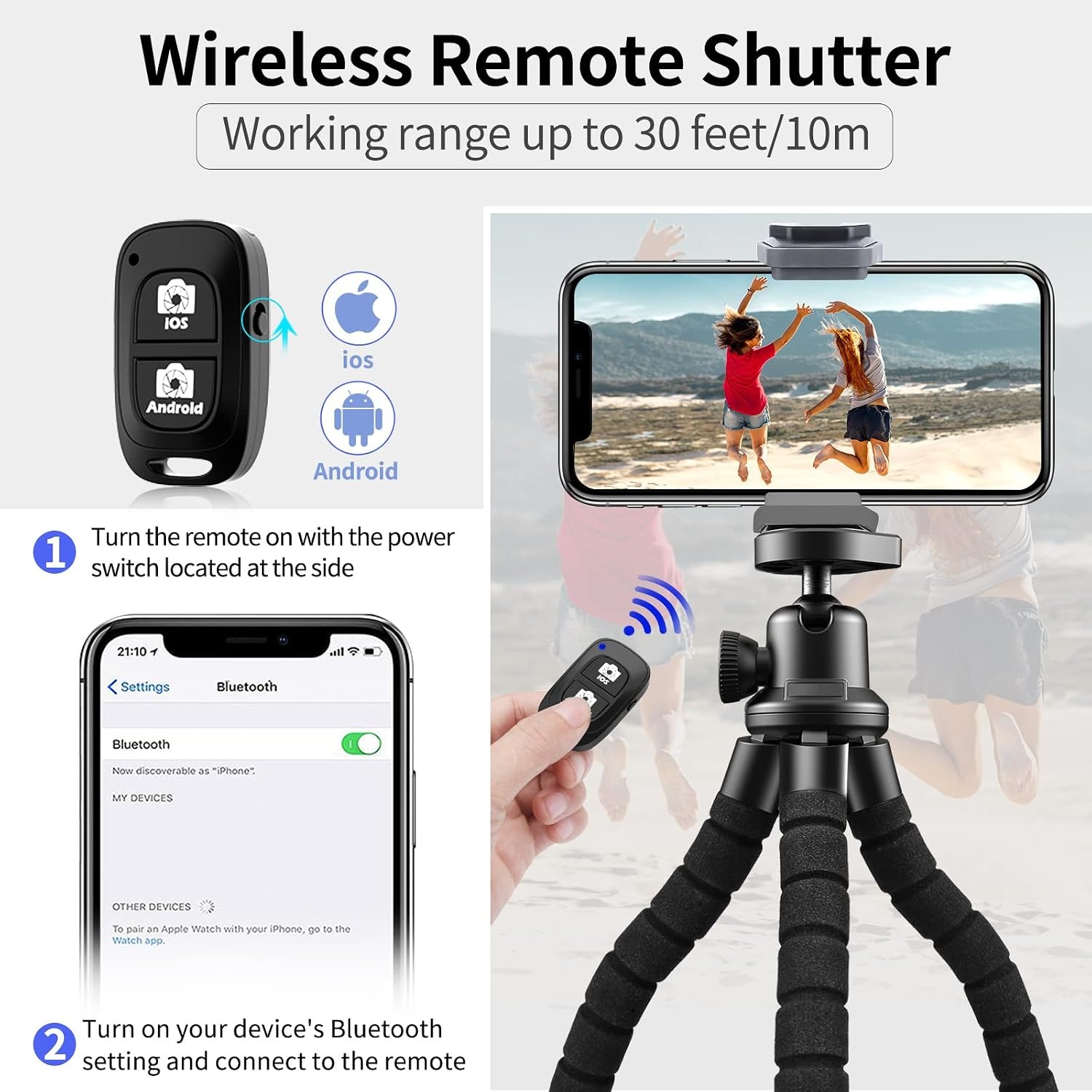
The remote is the part people underestimate. It works at up to 10 metres. You set the frame, walk away, and press the button when everyone is ready. No timer, no running, no asking a passerby.
Who it actually suits
Travellers get the most out of it. The folded height is 24 centimetres and it weighs 87 grams, which means it disappears into a daypack. If you have ever left a bigger tripod at home because it was too much to carry, this is the answer. A compact tripod for hiking only earns its place if you forget it is there.
Content creators are the other obvious group. If you film yourself, a fixed frame and a remote shutter save enormous amounts of time. You stop running back to the phone between takes. Wrap the tripod around a kitchen rail and you have an overhead cooking angle. Set it on a desk and you have a clean talking-head shot.
Parents and groups benefit in a quieter way. Family photos where everybody is actually in the frame are worth something. So are holiday pictures that are not all selfies taken at the same arm's length angle.
And there is the everyday use that has nothing to do with photography. Propped on a desk, it is a solid stand for video calls, recipes, and watching something while you cook. Plenty of people buy one for the camera and end up using it mostly as a stand.
What to look at when you compare
Folded size and weight. This is the single biggest predictor of whether you will use it. A tripod that is heavy or awkward stays in a drawer. At 87 grams and 24 centimetres, this one does not force a decision.
Leg type. Rigid legs give maximum stability on flat ground. Bendable legs give you options when there is no flat ground, which outdoors is most of the time. For a phone, which weighs very little, the flexibility is usually worth more than the extra rigidity.
Clamp range. Check your phone's width including the case. The 2.3 to 5.5 inch range here covers nearly everything, but thick rugged cases and battery cases can push past it. Measuring takes ten seconds and saves a return.
Head movement. A ball head that rotates fully is what lets you switch orientation quickly. Fixed or limited heads force you to reposition the whole tripod.
Remote range. Ten metres is enough to get a group of six into frame with room to spare. Shorter ranges start to limit what you can compose.
Load rating. The stated limit here is 6.6 pounds, around 3 kilograms. A phone is nowhere near that, so the margin is comfortable.
Getting good results with it
A few habits make a surprising difference.
Set your angle before you lock the head, not after. Trying to nudge a locked ball head is how you end up with a crooked frame and a loose clamp.
When you wrap the legs, use two legs around the object and leave the third as a brace. That triangle is far more stable than wrapping all three in the same direction.
On a table, spread the legs wide rather than keeping them close together. A wider base resists knocks.
Use the remote even when the phone is within reach. Touching the screen introduces exactly the shake you set the tripod up to avoid, and on a long exposure that is the whole shot.
For video, check the frame with the phone already mounted. What looks centred by eye is often off once the ball head is involved.
Looking after it
There is not much to it. Wipe the legs and the head with a dry or slightly damp cloth when they get dusty. Keep it away from water, since it is not water resistant, and dry it off if it gets caught in a shower.
Do not force the legs past the point where they want to bend. The metal cores inside will take a lot of repeated shaping, but like any wire they have limits. Bend smoothly rather than cranking hard at a single point.
Do not over-tighten the ball head or the clamp. Firm is enough. Cranking down on plastic threads is how small mounts fail.
Store it folded. Loose in a bag with keys, the foam will scuff. A small pouch or a dedicated pocket keeps it tidy. If you are not going to use it for months, take the battery out of the remote.
The short version
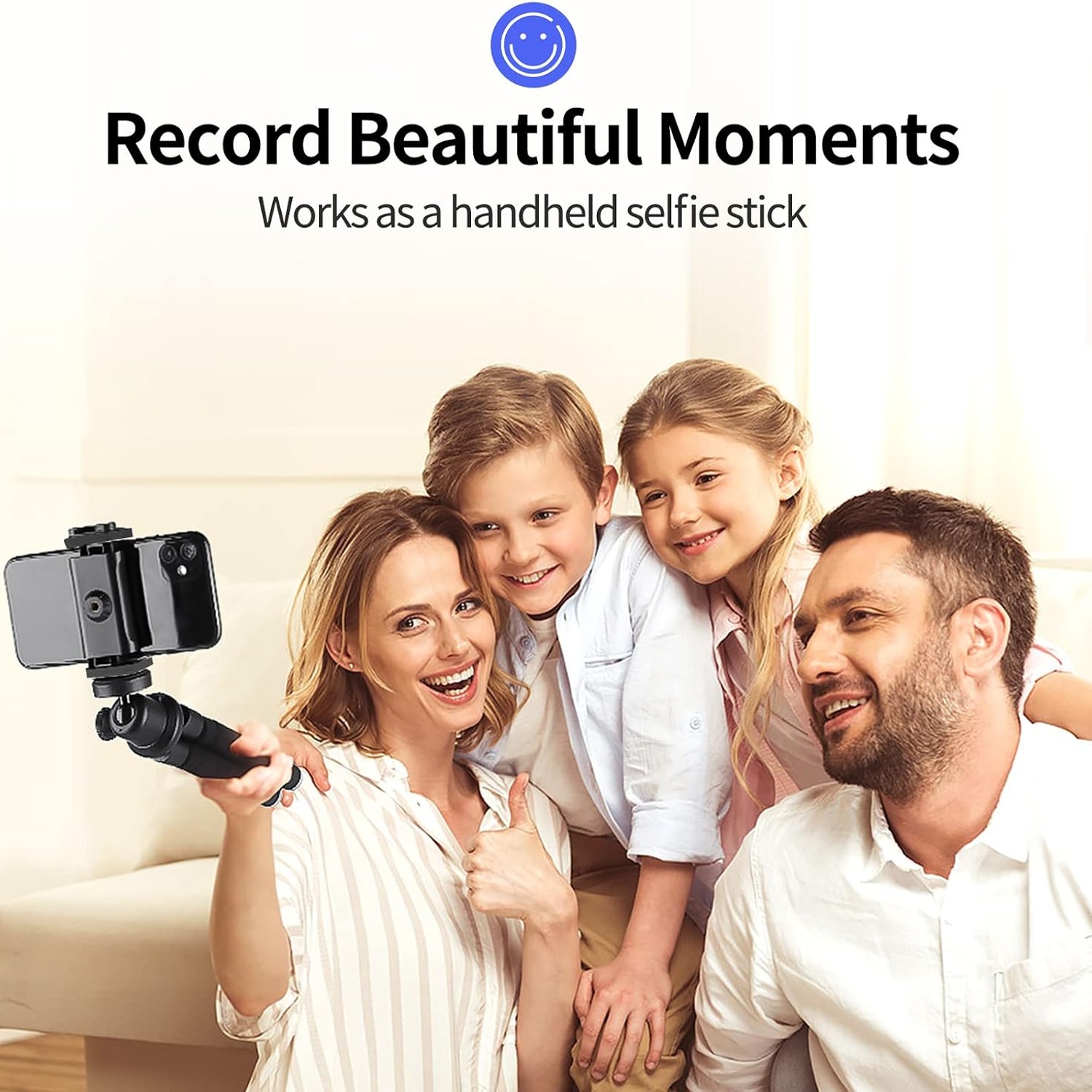
This is a 87 gram, 24 centimetre tripod with bendable metal legs, a 360 degree ball head, a clamp for phones from 2.3 to 5.5 inches, and a wireless remote good for 10 metres. It stands on a table, wraps around a railing, folds into a hand grip, and gets you into your own photos.
It is not a replacement for a full-size camera tripod, and it is not built for heavy gear. What it is built for is being carried. The best mini phone tripod is the one that is in your bag when the shot appears, and at this weight there is very little reason to leave it behind.