
The complete guide
How to Choose a 2K Webcam for Work, Study and Video Calls
The problem with the camera you already own
Open your laptop lid and look at the small dot above the screen. That camera was probably specified to hit a price, not to make you look good. It sits low, so it points up at your chin. The sensor is tiny, so it gives up the moment the light drops. And it shares space with hot components, which is why the picture often has a faint grain even in a bright room.
For a quick chat that is fine. For a job interview, a client meeting, a lesson you are teaching, or a weekly catch-up with family on the other side of the world, it starts to matter. People read faces. If yours is soft and slightly orange, the conversation works a little harder than it needs to.
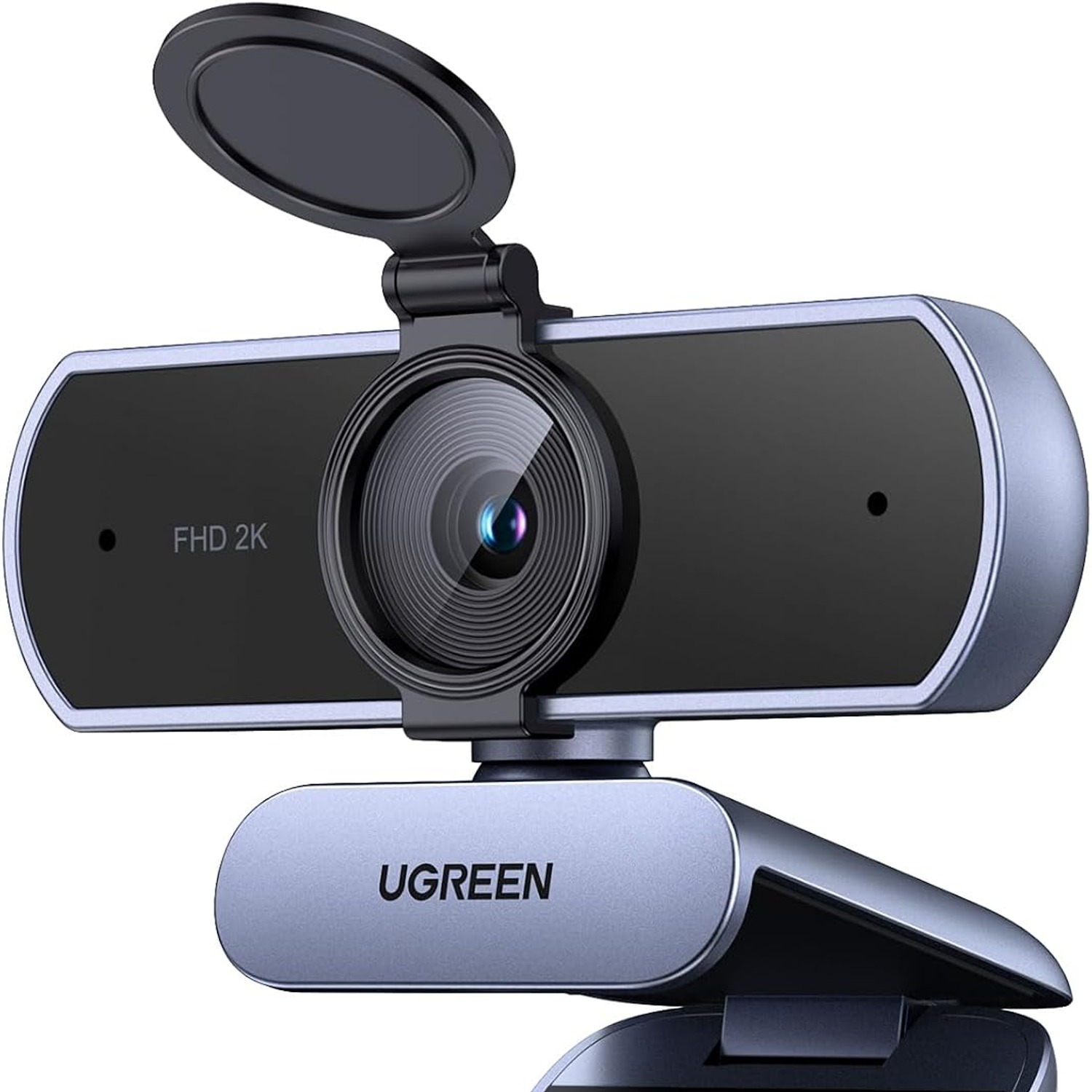
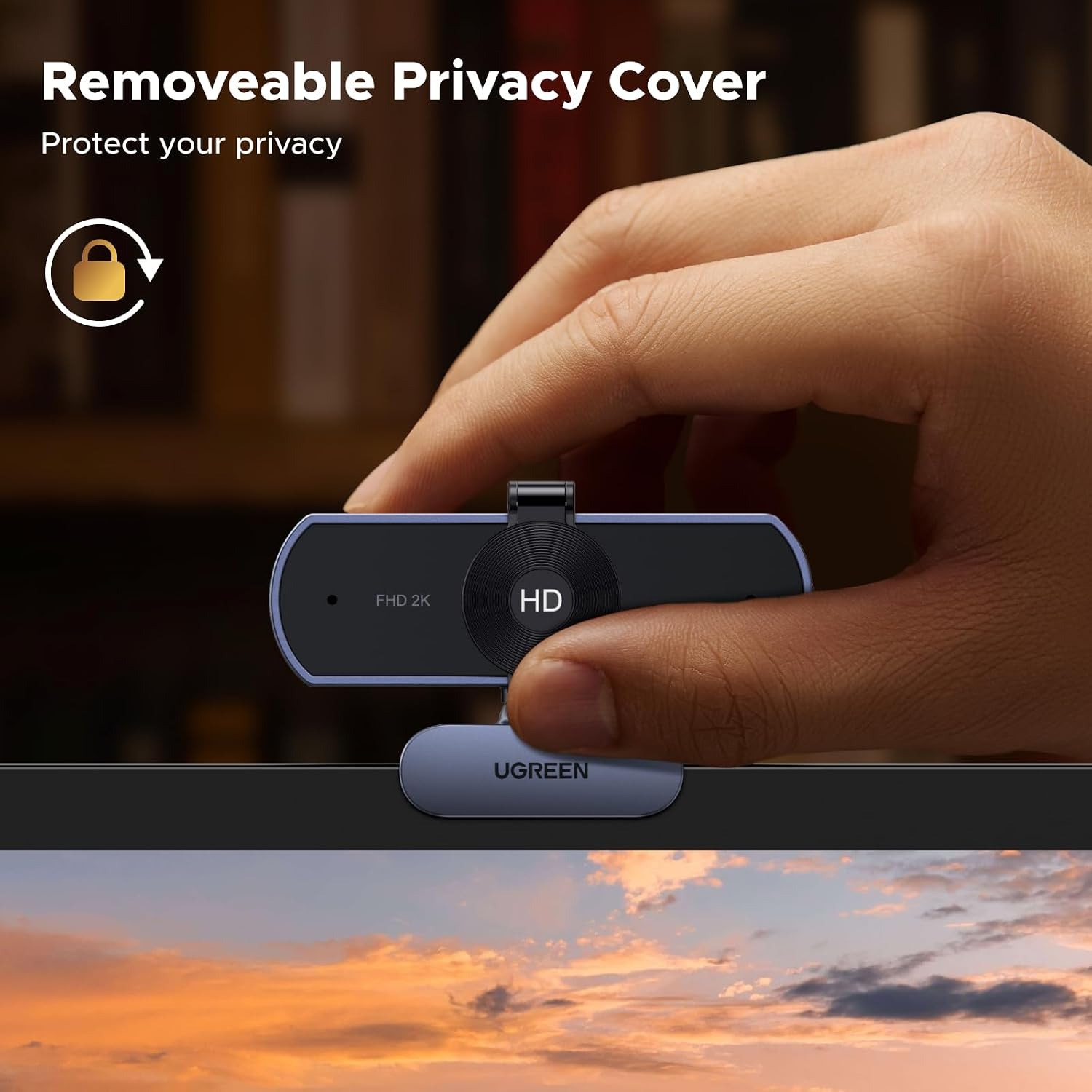
A separate USB webcam fixes most of that in one move. You get a larger sensor, better optics, and the freedom to put the camera at eye level instead of lap level. This UGREEN model does that at 2K resolution, with microphones built in and a shutter you can slide across the lens when you want the camera genuinely off.
What 2K actually gives you
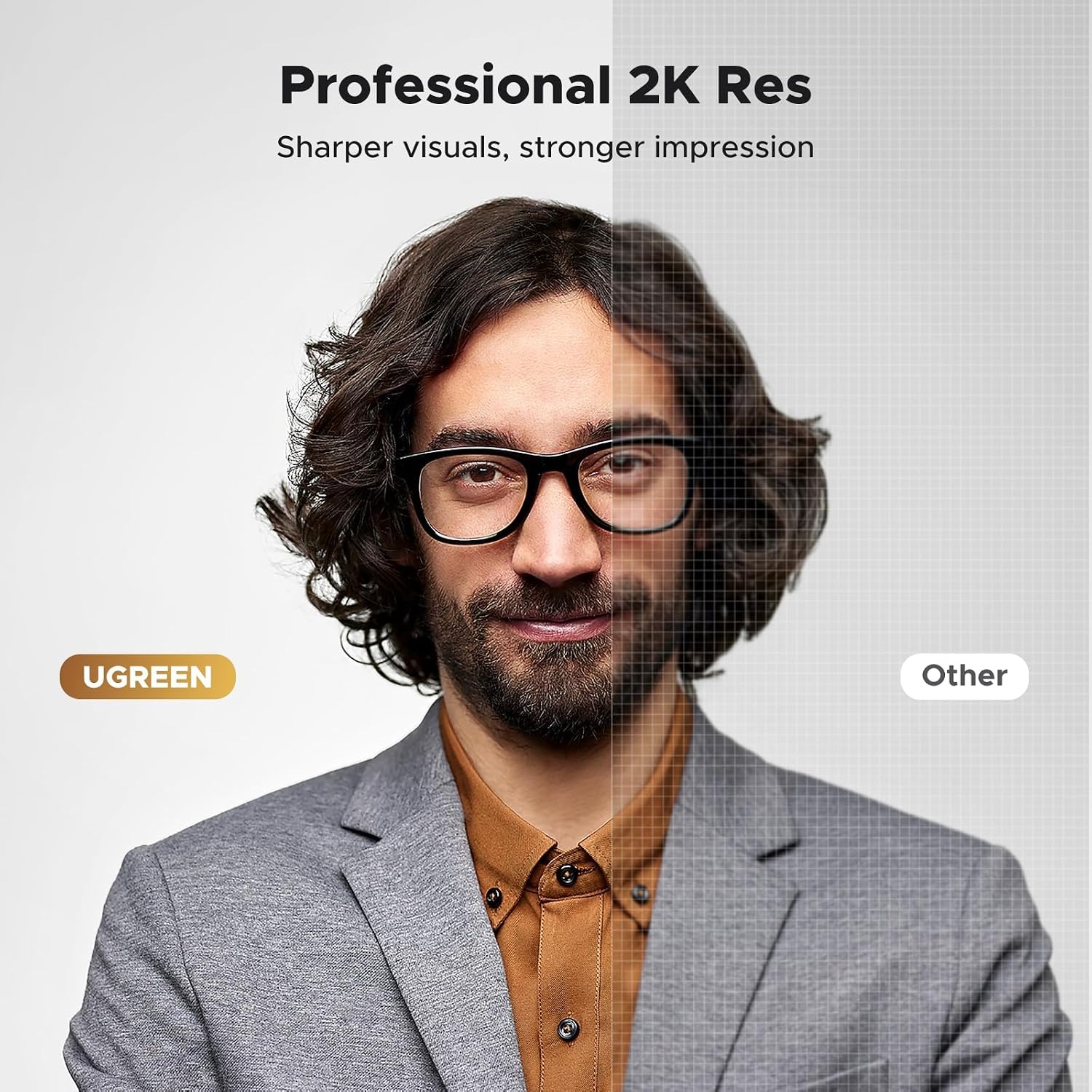
2K sits above standard 1080p. More pixels means more detail, and detail is what survives compression when your video gets squeezed down for a call.
That matters in two ways. First, your face stays defined rather than smudged, especially around the eyes and mouth where people pick up expression. Second, anything you hold up to the camera stays readable. A sketch, a part number on a cable, a page of homework. With a 4 MP CMOS sensor behind the lens, the camera is capturing enough information that the call software still has something good to work with after it compresses the feed.
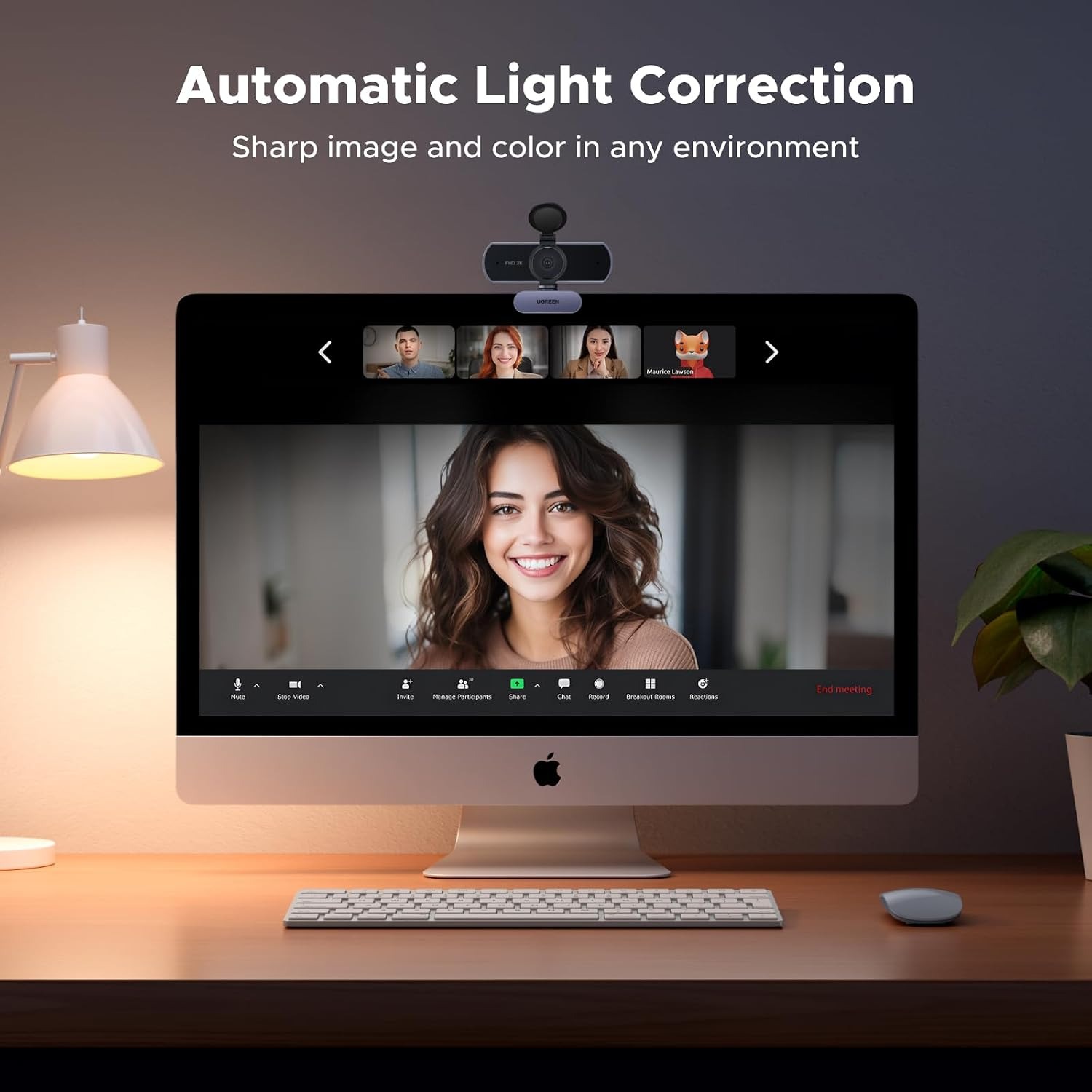
Resolution alone does not make a picture look good, though. Light does. A camera with a decent sensor and poor lighting will always lose to a modest camera facing a window. This one helps by adjusting colour temperature automatically and lifting dim scenes, so a desk lit by one lamp does not leave you in silhouette. It is not magic, but it covers the awkward middle hours when the room is neither bright nor dark.
Fixed focus, and why that is not a downgrade
A lot of people assume autofocus is automatically better. On a desk, it often is not.
Autofocus cameras hunt. Someone walks past, you reach for a mug, your hand crosses the frame, and the whole image goes soft for a second while the lens hunts for a new target. On a long call, that pulsing gets distracting.
This camera uses a fixed-focus prime lens instead. It is set to be sharp across the range where a person actually sits at a desk, and it stays there. Nothing moves, nothing hunts, the picture is simply stable. If you spend most of your camera time seated in front of a screen, that is the more useful behaviour.
The 80 degree frame
Field of view is one of the quiet specs that changes how a camera feels.
Very wide cameras, up to 120 degrees, are built for conference rooms where a group shares one camera. Point one at a single person and two things happen. You end up small in the middle of a lot of empty room, and the edges of the frame start to bend, which is what makes faces look stretched when someone leans sideways.
Very narrow cameras crop in so tightly that you cannot move without leaving frame.
80 degrees is the sensible middle. One person fills the frame properly at arm's length from the screen. Two people fit side by side if you both pull back a little. Lines stay straight. For anyone shopping for the best webcam for home office use rather than a boardroom, that is the angle you want.
Sound without extra gear
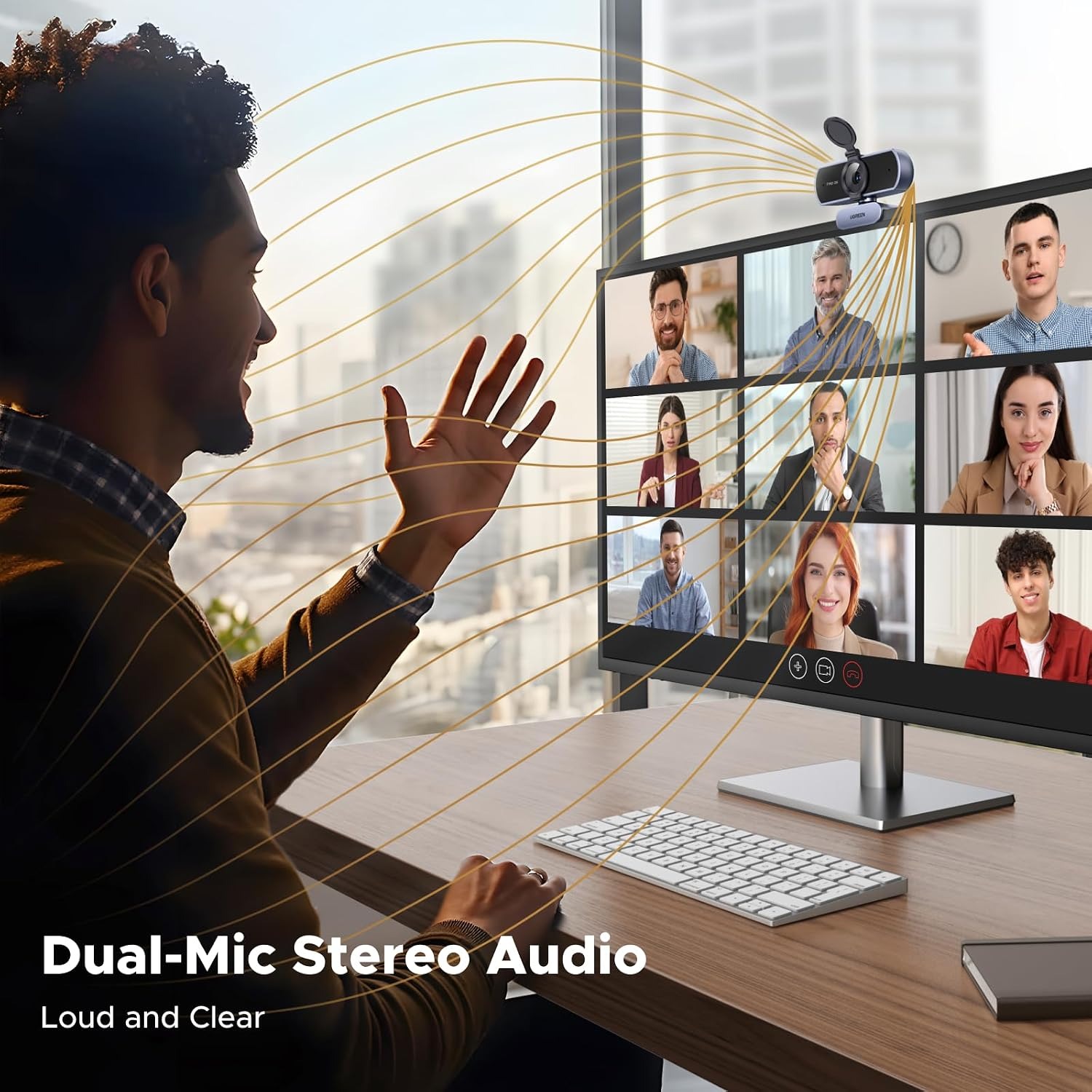
Two microphones are built into the body, with noise cancellation working across them. This is enough for normal meetings, online classes and family calls. You plug in one cable and both your video and your voice are handled.
There is a limit worth knowing. Any microphone sitting a metre away on top of your monitor picks up the room as well as you. If you are in a quiet study, that is a non-issue. If you share a space with a television, a dishwasher, or a flatmate on another call, a headset will always isolate your voice better. The good news is you can use both: let the camera handle video and point your app's audio input at a headset. For most people, the built-in mics mean one less thing on the desk, and that is the best webcam with built in microphone outcome they were after.
Physical privacy beats software privacy
Software indicators are useful, but they rely on software being honest. A sliding cover does not.
The shutter on this camera moves across the lens with a fingertip. Closed means closed. There is no configuration, no permission list, no app to trust. When the call ends, you push it shut and the hardware itself is blind.
Plenty of people improvise this with tape or a sticky note. A built-in shutter is simply tidier, and you are far more likely to actually use it than a bit of tape you keep peeling off and losing.
Setting it up
Connection is USB with no drivers to install. You plug it in, the computer registers a standard video device, and your meeting app lists it as a camera option.
It supports Windows 7, 8, 10 and newer, macOS 10.6 and above, Linux and Android. That range covers a current work laptop, a family desktop, and the older machine in the spare room that someone still uses for homework.
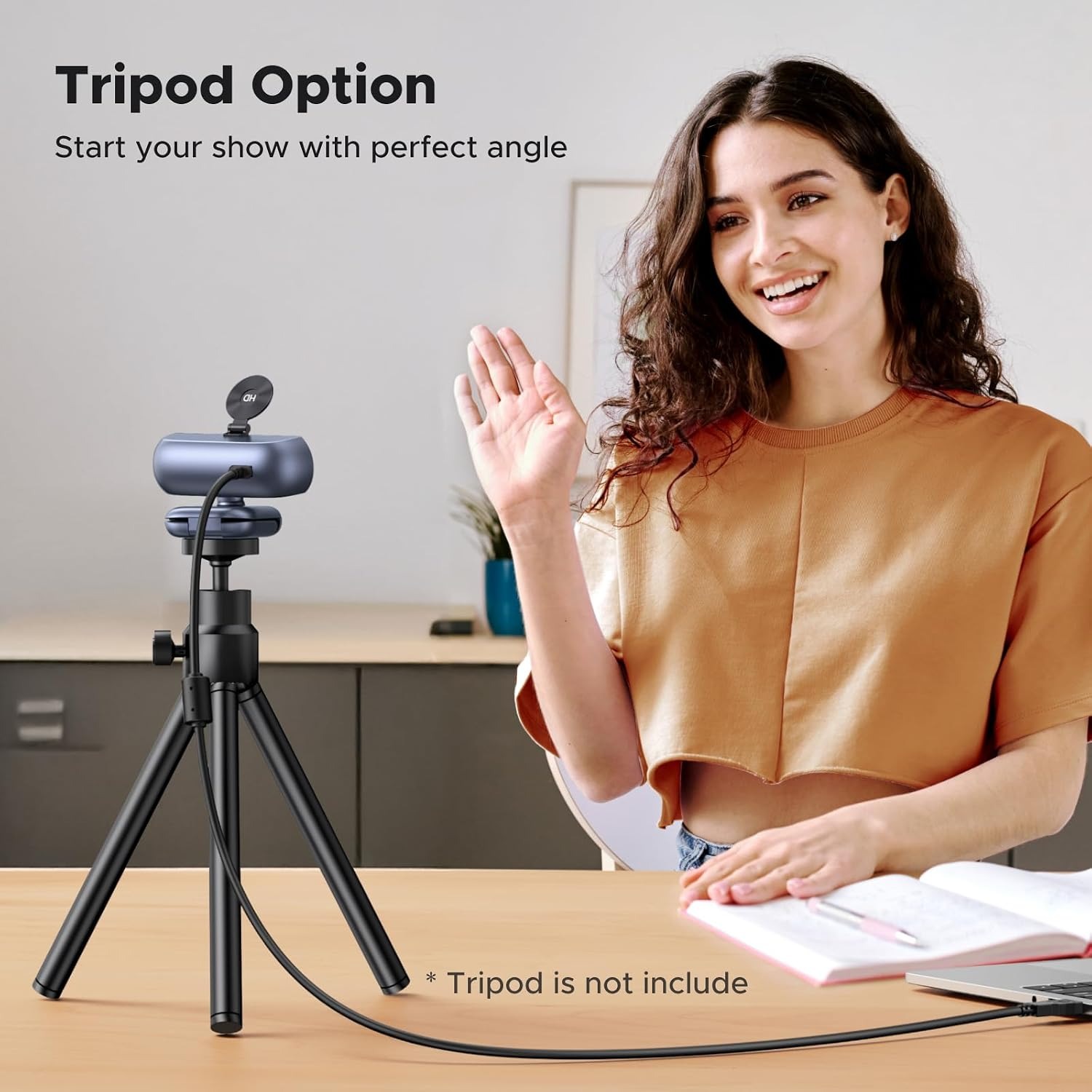
The mount clips onto monitors, laptop lids and TVs, and the head rotates a full 360 degrees. If your screen has an unusual bezel or you want the camera somewhere else entirely, there is tripod support as well. At 100 grams it is light enough that it will not tip a slim laptop screen backwards.
A quick placement tip. Mount the camera at or slightly above eye level and tilt it very gently downward. Your eyes should land in the upper third of the frame. That single adjustment does more for how you come across than any setting in your software.
Who this suits
It fits people who are on camera regularly but do not want a production setup. Remote workers in daily stand-ups. Teachers and tutors running lessons online. Students in seminars. Anyone doing interviews. Grandparents who want to see faces clearly instead of guessing at a blur.
It is also a straightforward upgrade for a desktop PC that has no camera at all, which is still true of most tower machines and many monitors.
It is less suited to anyone wanting a wide room-filling conference camera, or to serious studio work where a dedicated mic and separate lighting are already part of the plan. For that middle ground of regular, ordinary video calls that you simply want to look and sound better, it lands well.
Looking after it
There is not much to it. Wipe the lens occasionally with a dry microfibre cloth, never with tissue or spray cleaner. Keep dust off the body with a soft brush. Unplug it before any cleaning, and keep liquids well away, since the unit is not water resistant.
Store it out of direct sun, and get into the habit of sliding the cover shut when you finish a call. That protects the glass and handles privacy in the same motion.
The short version
This is a 2K USB webcam with a 4 MP CMOS sensor, a fixed-focus prime lens, an 80 degree field of view, dual noise-cancelling microphones and a sliding privacy shutter. It needs no drivers, draws power over USB, weighs 100 grams, and mounts to monitors, laptops, TVs or a tripod with 360 degree rotation.
If your current camera is the one built into your laptop, this is a clear step up in sharpness, framing and control, with almost nothing to learn. Plug it in, pick it in your app, and get on with the call.